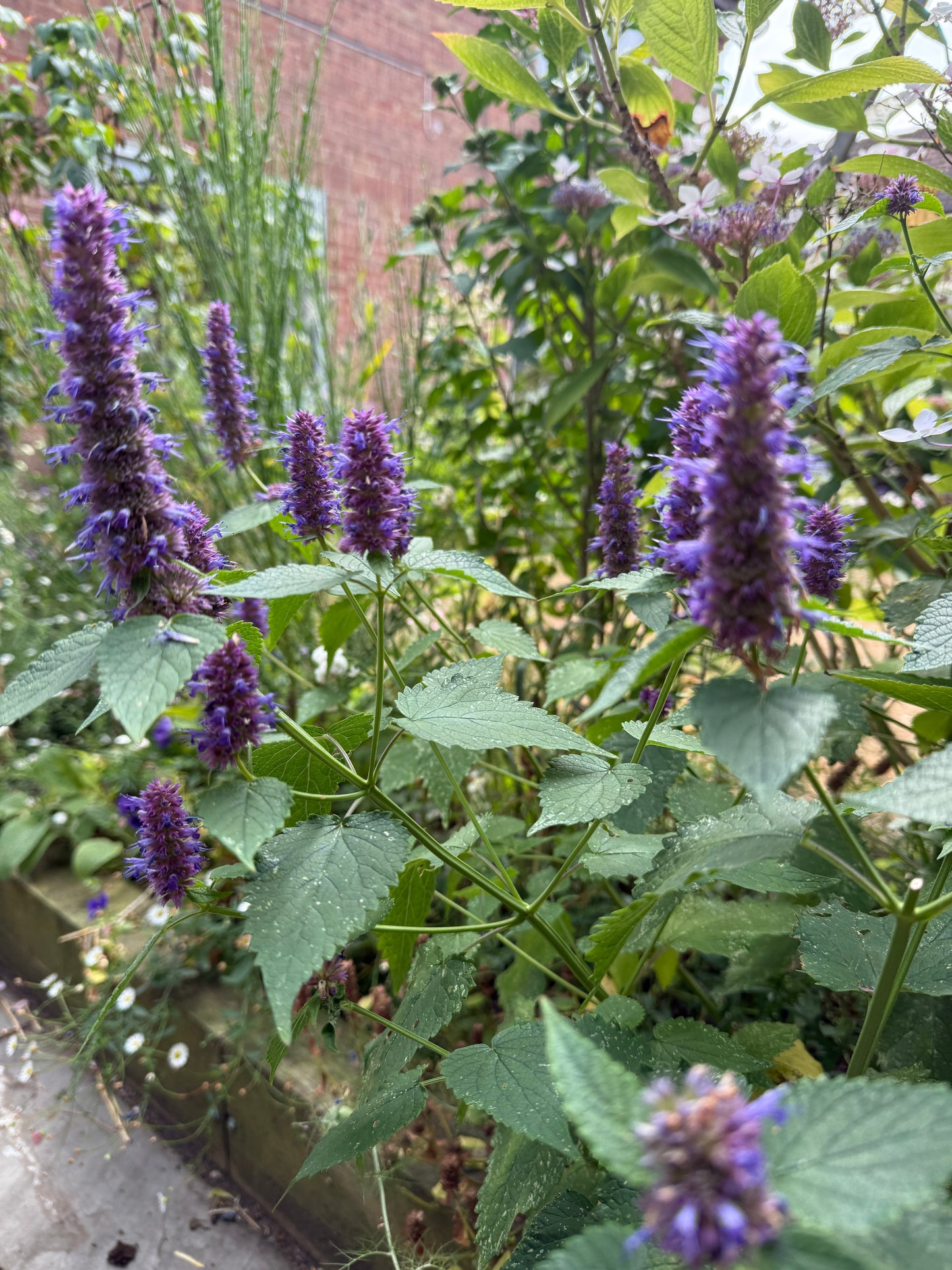
Agastache Liquorice Blue
Agastache Liquorice Blue
Couldn't load pickup availability
Agastache 'Liquorice Blue' Giant Hyssop 'Liquorice Blue'
Tall, aromatic, violet-blue bottle-brush spikes of extraordinary wildlife value, rising above foliage that releases a powerful aniseed and liquorice scent at the slightest touch — 'Liquorice Blue' flowers in its first year from seed and continues from July through to the first October frosts.
If we had to pick one plant that earns its place in every cottage garden border for sheer volume of bee visits, it would be this one. Agastache is the kind of plant that hums audibly on a warm August afternoon — the long, dense flower spikes producing nectar so freely that they're considered one of the very best garden plants for supporting late-summer pollinators. The aromatic foliage smells unmistakably of aniseed when brushed and is famously deer- and rabbit-resistant. Grows quickly to 70–90cm in its first year, flowers reliably the same season, and behaves as a short-lived perennial in milder UK gardens. RHS Plants for Pollinators recognised.
A note on growing
Sow indoors from February to April at 18–20°C. Surface-sow or barely cover with fine vermiculite — agastache benefits from light during germination. Germination takes two to three weeks. Plant out after the last frost in full sun and well-drained soil. This is a plant that genuinely thrives in poor, dry conditions and resents wet feet, particularly in winter — good drainage is more important than fertility. In wetter inland gardens, treat as an annual or short-lived perennial; in well-drained sunny borders, expect three to four years from each plant.
Where it shines
In wildlife gardens, prairie-style borders, and any cottage scheme that wants reliable late-summer colour. The flower spikes are exceptional for cutting — they last well in the vase and carry their scent indoors — and they dry beautifully for autumn arrangements. The aniseed-scented foliage is also useful for herbal teas and as an ornamental edible. Few plants deliver as much wildlife value per square metre.
Plant alongside
Combine with Echinacea purpurea, Rudbeckia, and ornamental grasses for a classic prairie-style border. For a more cottage-garden feel, pair with Achillea 'Pastel Mixed' and Cornflower. The blue spikes also contrast beautifully with the gold of Achillea 'Cloth of Gold'.
Share