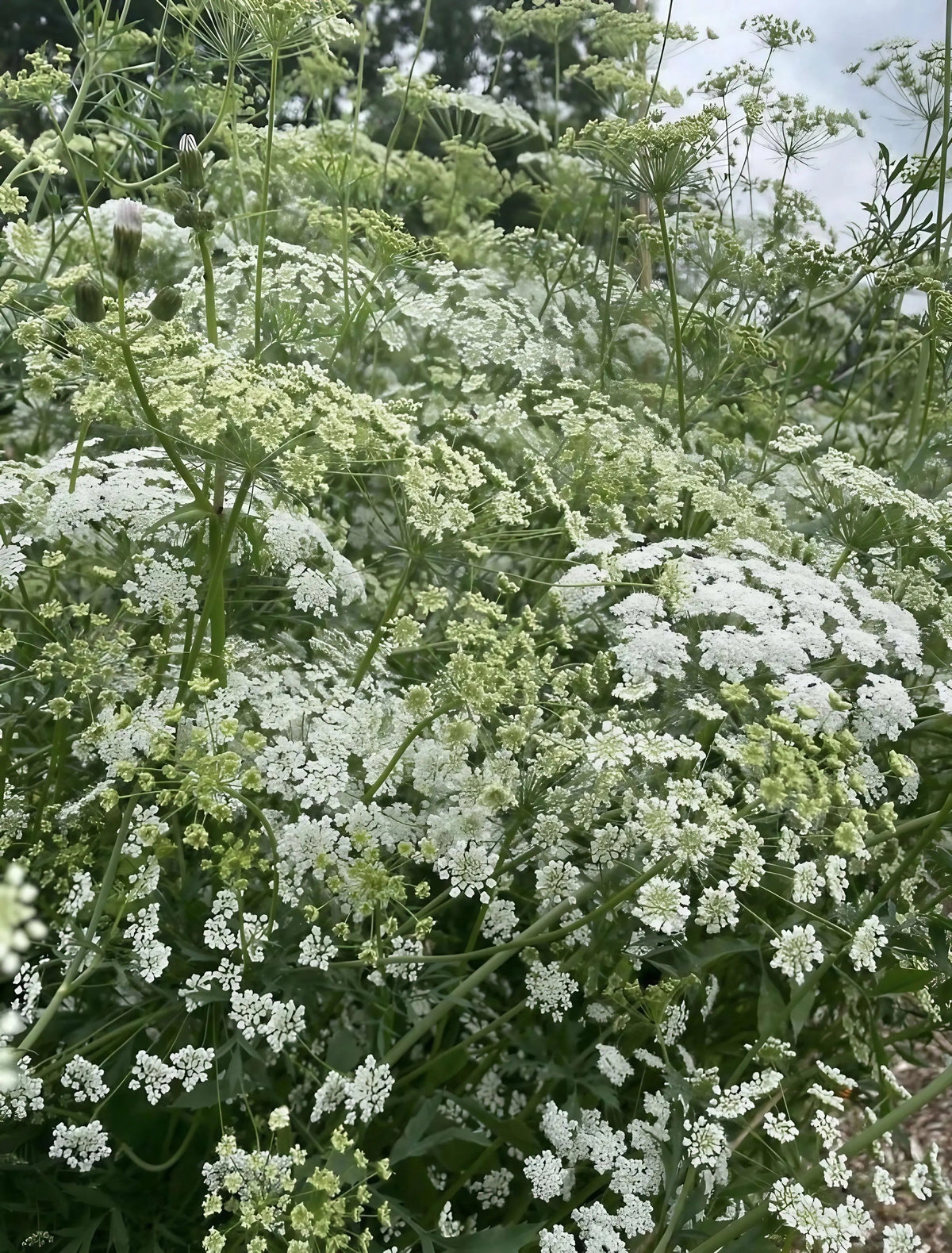
Ammi majus
Ammi majus
Couldn't load pickup availability
Flat white lace-cap heads on tall slender stems above ferny foliage, as light and diffuse as sea foam. It has become the standard filler in British cutting gardens over the past decade for the simple reason that nothing else gives you that airiness on a stem you can actually cut.
Autumn sowing is what separates a good ammi from a mediocre one. Sown in September or October it overwinters as a small plant, goes away in spring with a root system already made, and comes in taller, stronger and two to four weeks earlier with noticeably bigger heads. Spring-sown plants are perfectly usable, just smaller. It makes a long taproot and resents being moved, so it does better sown where it is to grow than raised in modules and planted out. It self-seeds freely in a sheltered garden, which is either a bonus or a nuisance depending on how tidy you keep things.
Ammi is in the same family as giant hogweed and the sap is phototoxic. It is far milder than its notorious relative, but wear gloves and long sleeves when cutting in bright sunshine, particularly if your skin is sensitive.
Share