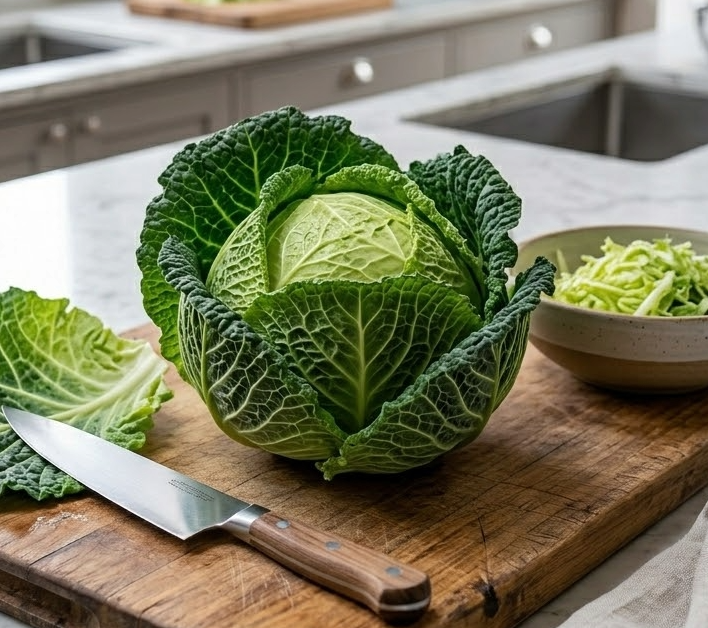
Cabbage Savoy Cordesa F1
Couldn't load pickup availability
Savoy Cabbage 'Cordesa' F1 Seeds
The world's first clubroot-resistant savoy cabbage — compact, heavy, deeply crinkled, and autumn-hardy, solving the problem that has defeated savoy growers in affected soils for generations. All the sweet, tender depth of a classic savoy, with the one weakness of the family entirely bred out.
Savoy cabbage is the most flavoursome and most culinarily versatile of all the cabbages — the dark, deeply crinkled, dark green leaves with their sweet, slightly nutty flavour are prized above every other cabbage in the British kitchen, and the savoy's ability to stand through autumn frosts while improving in flavour with each cold night has made it a cornerstone of the autumn and winter kitchen garden for centuries. It has, however, had one significant weakness: susceptibility to clubroot, the soilborne disease that distorts and destroys brassica roots and can persist in affected soil for twenty years or more. In a garden with clubroot, growing savoy cabbage has historically been, at best, unreliable, and at worst, impossible.
'Cordesa' F1 changes this entirely. Bred as the first and, for many years, the only savoy cabbage variety with genuine resistance to clubroot, it delivers everything that makes savoy the finest of cabbages — compact, heavy heads of deeply crinkled, dark green leaves with outstanding flavour, standing well through September to early December without deteriorating — in a plant that simply does not succumb to the disease that defeats all other savoy varieties. For gardeners in unaffected soil it is a superb savoy with excellent F1 hybrid vigour. For gardeners in clubroot-affected soil it is, quite simply, the only savoy worth growing.
🌿 Understanding the Plant
Brassica oleracea var. sabauda 'Cordesa' F1 is a Hardy Biennial grown as an annual — a compact, heavy, clubroot-resistant F1 hybrid savoy cabbage bred for the autumn and early winter harvest window, producing round heads of deeply crinkled, dark green leaves with excellent flavour on plants reaching approximately 40cm in height and spread.
What is Clubroot and Why Does it Matter? Clubroot (Plasmodiophora brassicae) is a soilborne pathogen that infects the roots of all brassica family plants — cabbages, kale, broccoli, Brussels sprouts, swede, turnip, and many flowering plants including wallflowers and stocks. Infected roots become swollen, distorted, and unable to absorb water and nutrients effectively, causing plants to wilt in dry weather, fail to heart up, and die prematurely. The spores that cause clubroot can persist in affected soil for twenty years or more even without a host crop, making it impossible to eliminate through crop rotation alone. In gardens with confirmed clubroot, growing any brassica successfully requires either growing in raised beds of fresh compost, liming the soil heavily to raise the pH above 7.0, or — with 'Cordesa' — choosing a resistant variety.
How the Resistance Works: 'Cordesa' carries a specific genetic resistance to the most common pathotypes of clubroot found in UK soils, developed through careful breeding by Rijk Zwaan. This resistance does not make the plant immune to all clubroot strains under all conditions, but in normal garden conditions with typical UK clubroot pathotypes it provides highly effective protection that allows the plant to develop a healthy root system and produce a quality crop where all other savoy varieties would fail. Raising the soil pH to 7.0–7.5 through liming alongside growing 'Cordesa' provides the most robust possible protection in heavily affected ground.
The Savoy Advantage: The deeply crinkled, blistered texture of savoy cabbage leaves is not merely ornamental — the crinkled surface increases the total leaf area available for photosynthesis without increasing the volume of the head, contributing to the savoy's notably sweeter and more complex flavour compared to smooth-leaved varieties. The air pockets within the crinkled leaf structure also make savoy cabbage significantly lighter and more tender than the equivalent weight of smooth-leaved cabbage, which is why savoy is the preferred choice for dishes where the cabbage needs to cook quickly and retain its texture.
🌱 Growing Guide
'Cordesa' is grown in the same way as other savoy cabbages, with the additional recommendations for clubroot-affected soils noted below.
How to Sow:
Sow indoors or in a seedbed from March to May for an autumn and early winter harvest. Sow seeds approximately 1–2cm deep in trays or a prepared seedbed at a minimum temperature of 15°C. Germination typically occurs within 7–10 days. Grow on in good light — etiolated, drawn seedlings transplant poorly and are more susceptible to pests. For clubroot-affected soil, raise seedlings in fresh multipurpose compost in individual pots rather than in a seedbed drawn from garden soil, which may already contain clubroot spores.
Transplanting:
Transplant into their final growing position from May to July once plants have four to six true leaves. Space plants 45–50cm apart in rows 50–60cm apart — wider spacing produces larger, heavier heads. Firm the soil well around the transplant and water in thoroughly. In clubroot-affected soil, lime the planting area to raise the pH to 7.0–7.5 before transplanting, and dip transplant roots in a proprietary clubroot dip for additional protection. Place brassica collars around each stem at planting to prevent cabbage root fly.
Ongoing Care:
Water consistently through dry spells during the establishment and head-forming periods. Apply a nitrogen-rich feed in July to support leafy growth. Earth up around the base of plants to improve stability as heads develop. Cover with fine mesh netting from transplanting to prevent cabbage white butterfly from laying eggs on the leaves — inspect regularly and remove any caterpillars that breach the net. Pigeons are particularly attracted to savoy cabbages in winter — netting should remain in place through the entire growing season.
Harvesting:
Harvest from September to early December when heads feel firm and well-formed. 'Cordesa' stands well in the ground without deteriorating, so heads can be left and harvested as needed rather than all at once. In a mild autumn, heads harvested in November will be at their flavour peak — the crinkled leaves hold their sweetness and tenderness well through moderate frosts. Cut at the base with a sharp knife.
📋 Plant Specifications
| Botanical Name | Brassica oleracea var. sabauda 'Cordesa' F1 |
| Common Name | Savoy Cabbage 'Cordesa' |
| Plant Type | Hardy Biennial grown as Annual |
| Hardiness | H5 — very hardy; stands well through autumn frosts |
| Sowing Method | Sow indoors or in seedbed; transplant to final position |
| Light Requirements | Full Sun ☀️ |
| Plant Height & Spread | 40–50cm height and spread — compact habit |
| Plant Spacing | 45–50cm apart, rows 50–60cm apart |
| Head Type | Round, compact, heavy — deeply crinkled dark green leaves |
| Clubroot Resistance | Yes ✓ — the first and primary clubroot-resistant savoy variety |
| Harvest Period | September to early December |
| Stands Well | Yes — harvest as needed without deterioration |
| Flavour | Sweet, tender, mildly nutty — classic savoy quality |
| Best Uses | Braising, stir-frying, soups, stuffed cabbage leaves, colcannon |
| Seeds per Packet | 20 seeds |
| Perfect For |
🛡️Clubroot-Affected Soils
🥬Autumn & Early Winter Harvesting
🍲Braising, Soups & Slow Cooking
❄️Frost-Hardy Kitchen Garden Cropping
🌿All Brassica Growers — Reliable F1 Savoy
|
🤝 Companion Planting
The same companions that support red and green cabbages work equally well alongside 'Cordesa' — with the particular note that in clubroot-affected soil, companion plants should be chosen from non-brassica families only:
- 🌼 Calendula 'Art Shades Mixed': The Pest Barrier. Calendula is the most reliable and most broadly useful companion for all brassicas — its sticky stems trap aphids and whitefly before they establish on cabbage leaves, its strong scent disrupts the host-finding behaviour of the cabbage white butterfly, and its open flowers sustain a population of hoverflies and parasitic wasps that keep pest populations in check from June through to October. Planted at the edge of the brassica bed or interplanted among the 'Cordesa' plants, it provides a living pest barrier that works throughout the growing season. As a non-brassica, it is safe to grow in clubroot-affected soil without risk of harbouring or spreading the pathogen.
- 🌟 Borage: The Butterfly Deterrent. Borage's aromatic foliage is traditionally associated with deterring the cabbage white butterfly, and its prolific, sustained flowering from June to October keeps beneficial insects — particularly bumblebees and hoverflies — present throughout the brassica growing season. As a deep-rooting, non-brassica annual it is safe to grow in clubroot-affected soil and its extensive root system can actually help to improve the drainage and aeration of compacted or heavy soils around the cabbage bed. The electric blue of its flowers provides a welcome visual note in the predominantly green brassica patch through the summer months.
- 🌿 Basil Classic Italian: The Aromatic Neighbour. Basil's volatile aromatic oils deter aphids, whitefly, and thrips — the most common soft-bodied pest insects on brassicas — and its strong scent may help to confuse the cabbage white butterfly's ability to locate its host plants. Its low, bushy habit fills the bare soil at the base of the upright cabbage plants without competing for light, and as a tender annual it is completely unrelated to the brassica family and poses no clubroot risk. Growing basil alongside 'Cordesa' also means fresh herbs are always available at the same time as the cabbage harvest — particularly useful for the creamy, buttery colcannon and bubble-and-squeak dishes that savoy cabbage makes so well.
- 🔮 Cabbage 'Red Drumhead': The Complete Cabbage Trio. Growing 'Cordesa' savoy alongside 'Red Drumhead' completes the most visually and culinarily diverse cabbage collection the kitchen garden can provide — the deeply crinkled, dark green savoy heads alongside the smooth, glossy, purple-crimson drumhead, both harvesting through the same autumn window but looking entirely different and tasting entirely different. The savoy for dishes where tenderness and speed of cooking matter; the red drumhead for the long, slow braise. Together with 'Greyhound' completing the spring end of the year, this trio provides a genuinely complete year-round cabbage harvest of extraordinary variety from a single kitchen garden.
📅 Sowing & Harvest Calendar
Sow indoors from March and transplant in May to July for compact, deeply crinkled savoy heads standing ready to harvest from September — frost-hardy, slow to deteriorate, and at their sweet, tender best through October and November.
| Jan | Feb | Mar | Apr | May | Jun | Jul | Aug | Sep | Oct | Nov | Dec | |
|---|---|---|---|---|---|---|---|---|---|---|---|---|
| 🌱 Sow Indoors | ||||||||||||
| 🪴 Transplant | ||||||||||||
| 🥬 Harvest |
Two practices make the most of 'Cordesa' in a clubroot-affected garden. First, lime the planting area to raise the soil pH to 7.0–7.5 before transplanting — clubroot thrives in acidic soil and is significantly suppressed at higher pH levels. 'Cordesa's resistance handles the pathogen directly, but liming reduces the pathogen load in the soil and provides a belt-and-braces approach that further reduces risk. Second, raise seedlings in fresh, peat-free multipurpose compost in individual pots rather than in a seedbed of garden soil — clubroot spores can persist in affected garden soil and infect seedling roots before transplanting, even in a resistant variety. Fresh compost contains no clubroot spores, and pot-raised seedlings have a head start in healthy root development before they encounter any spores in the final growing position. Together these two simple steps give 'Cordesa' every advantage in even heavily affected ground.
🛡️ The Savoy That Solves the Clubroot Problem
Brassica oleracea 'Cordesa' F1 is a genuinely significant development in kitchen garden history — the first savoy cabbage variety to carry resistance to the disease that has defeated savoy growers in affected soils for generations. For gardeners with clean soil it is a superb, reliable, compact F1 savoy of outstanding flavour that stands from September to December without deteriorating. For gardeners with clubroot it is quite simply the only savoy cabbage worth sowing — the variety that makes the autumn brassica harvest possible where it was previously impossible. Grow it alongside 'Red Drumhead' for the complete autumn cabbage pairing, and with 'Greyhound' to complete a year-round cabbage collection that covers every season and every use from the lightest spring salad to the richest winter soup.
📖 Want more detailed growing advice?
View our Complete Growing Guide →
Share