Courgette All Green Bush
Courgette All Green Bush
Couldn't load pickup availability
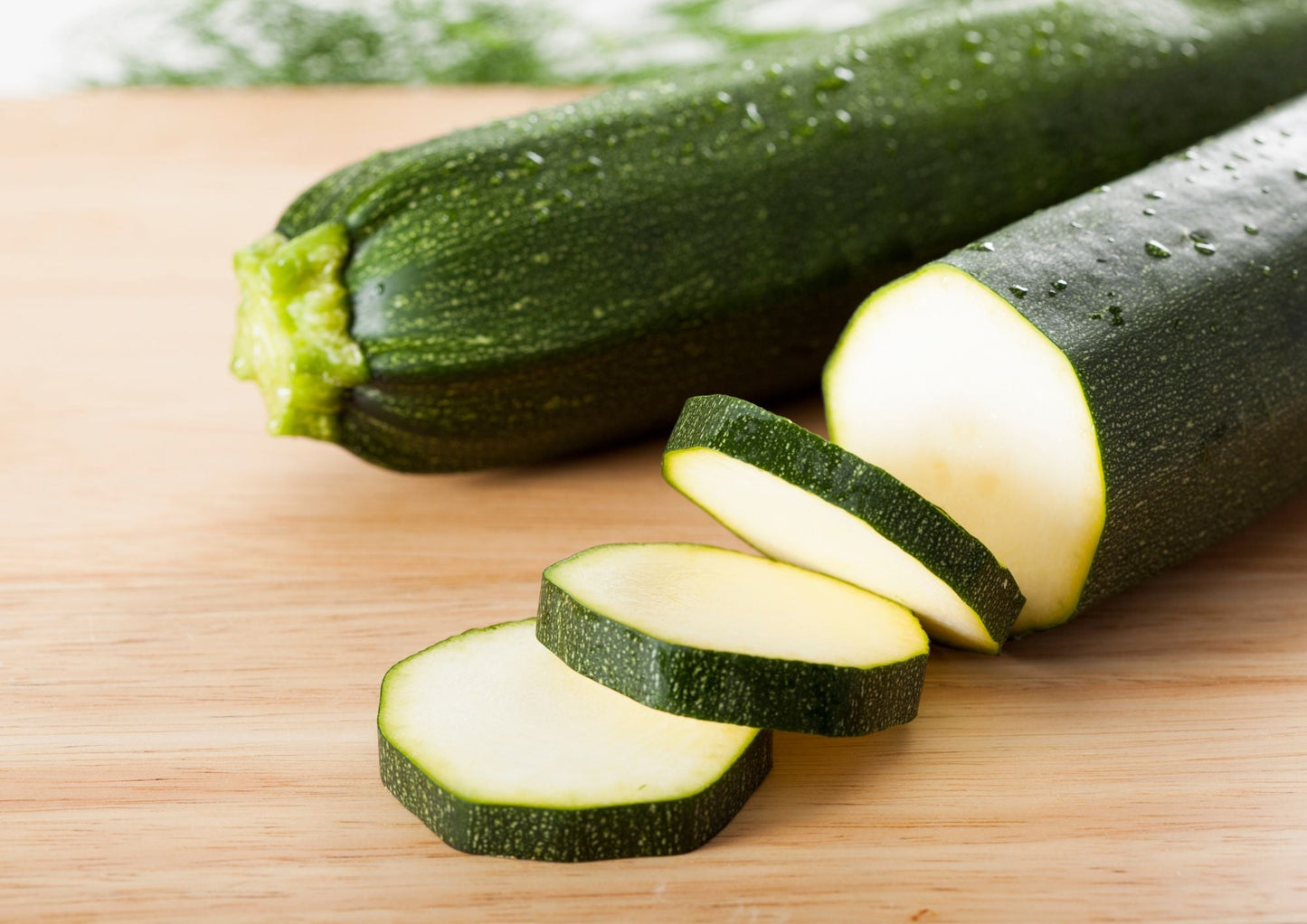
Cucurbita pepo 'All Green Bush' Heritage British bush courgette, the kitchen-garden standard
The British heritage courgette — reliable, productive, and entirely without pretension. All Green Bush has been a UK kitchen garden standard for decades for one reason: every plant produces a steady, dependable supply of dark green, faintly-mottled, classically courgette-shaped fruits from July right through to first frosts. Pick them young and small (15–20cm) for tender, sweet eating; let one or two grow on to marrow size if you fancy stuffing one for Sunday lunch.
"Bush" refers to the plant's growth habit — All Green Bush forms a compact, upright clump rather than the long sprawling vines of trailing courgette varieties. A single plant takes up roughly a square metre of garden space — manageable, easy to net or protect, easy to harvest, easy to inspect for emerging fruits. Compare this to old-fashioned trailing courgettes that can take over six square metres, and the case for All Green Bush in small to medium gardens is immediate.
The flavour is the classic mild courgette taste — nutty, sweet when young, slightly nuttier when allowed to develop, neutral enough to take on whatever flavours you add to it. Three or four plants will produce more courgettes than most families can keep up with. This is the variety for the gardener who wants courgettes and isn't trying to chase the most exotic, the most striped, or the most novelty — just a reliable, generous, productive bush courgette that has been doing the job for generations.
All Green Bush is open-pollinated heritage, meaning seed saved from your best plants will grow true the following year.
A note on growing
Sow indoors from late April to mid-May in 7cm pots of seed compost, planting seeds on their edge (vertical) at 2cm depth — this prevents them sitting in water and rotting. Germination takes 5–10 days at 18–20°C. Move to bright, cooler conditions to grow on. Alternatively, sow direct outdoors from late May, two seeds per station 1m apart, thinning to the strongest seedling.
Plant out from early June (Norfolk; later in colder areas) once all risk of frost has passed. Courgettes are completely frost-tender — even a light frost kills young transplants. Allow at least 90cm between plants. Choose a sunny, sheltered position in soil that has been enriched with well-rotted manure or garden compost the previous autumn. The plants are gross feeders and the better the soil, the heavier the crop.
Water consistently and generously through the season. Drought-stressed plants produce poor fruit and become vulnerable to powdery mildew (a grey-white coating on the leaves that can take down the whole plant in two weeks). A weekly liquid feed of high-potash tomato food from flowering onwards substantially improves fruit set.
Harvest from July through to October. Pick small and pick often — this is the single biggest piece of courgette advice. A young 15cm courgette eats like a different vegetable to a 30cm one; tender and sweet rather than seedy and bland. The more you pick, the more the plant produces — allow a few fruits to grow large and the plant slows down its production sharply. Most British gardeners pick three or four times a week through high summer.
Where it shines
In the kitchen, the standard British bush courgette is the everyday workhorse. Grill in slices with olive oil and garlic. Stuff with mince and bake. Bake into bread, cake, or muffins to use up gluts. Spiralise into "courgetti". Sliced thin into ratatouille. Stewed with tomatoes and herbs. The mild flavour takes on anything you give it.
In the garden, two or three plants is enough for most families. The compact bush habit makes All Green Bush particularly suitable for smaller gardens, raised beds, and patio container growing (in a large 45cm+ pot). For variety, pair with the Italian-tradition Courgette Zucchini for slightly different flavour and visual interest in the same bed.
Plant alongside
Courgettes benefit from companion planting that attracts pollinators and deters pests. Plant alongside French Marigold 'Spanish Brocade' whose strong scent deters whitefly and adds colour beneath the courgette canopy. Nasturtiums act as sacrificial decoy plants for aphids. Beans nearby fix nitrogen in the soil. Avoid planting near potatoes, which compete for nutrients and can encourage shared blight risk.
Share