Leek Blue Solaise
Leek Blue Solaise
Couldn't load pickup availability
Leek 'Blue Solaise' Seeds
A French heirloom whose leaves turn a spectacular violet-blue in hard winter frosts, while the stems develop a depth of sweet, refined flavour that has made it the pride of the Lyon kitchen garden for centuries.
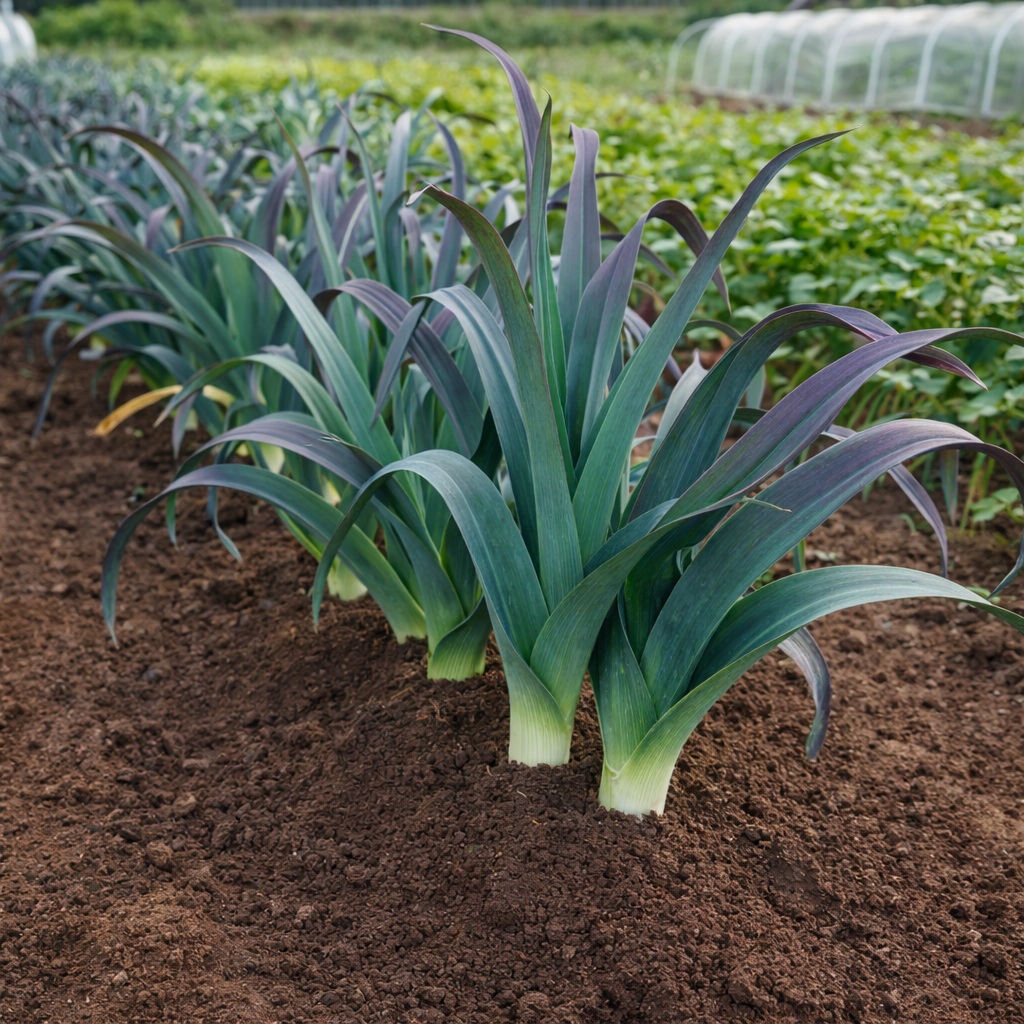
There are vegetables you grow because they are useful, and then there is 'Blue Solaise' — a leek you grow because it is genuinely extraordinary. This ancient French heirloom from the market gardens of the Rhône valley is, at its winter peak, one of the most visually arresting plants in the productive garden: the broad, strap-like flag leaves develop a deep, saturated violet-blue colouring after the first hard frosts that is unlike anything else growing in the December or January kitchen garden. It is the colour of a winter evening sky over the frost-silvered earth, and it is breathtaking.
But 'Blue Solaise' is no mere ornamental curiosity. The flavour of a well-grown, frost-kissed stem is exceptional — sweet, complex, and distinctly more refined than most British leek varieties, with a gentle depth that reflects centuries of careful selection by French market gardeners who valued eating quality above all else. It matures later than Musselburgh, extending the leek harvest further into late winter and early spring, and it stands in the ground in remarkable condition through the harshest weather. For the kitchen gardener who wants both beauty and flavour from their winter vegetable plot, there is simply no better leek.
🌿 Understanding the Plant
Allium ampeloprasum var. porrum 'Blue Solaise' (also known as 'Bleu de Solaise' or 'Violet Gros de Rouen') is a Hardy Biennial grown as an annual and one of the oldest and most celebrated leek varieties in European cultivation. It originates from the market gardening traditions of the Lyon region in south-eastern France, where it has been grown continuously since at least the early 19th century. It is classified as a very late-season leek, maturing from November onwards and remaining in outstanding condition through the deepest winter months.
The Violet Transformation: The defining characteristic of 'Blue Solaise' is its extraordinary colour change in cold weather. During summer and early autumn the flag leaves are a conventional blue-green, but as temperatures drop below freezing the leaves undergo a dramatic colour shift — developing an intense, saturated violet-blue that is caused by the same anthocyanin pigment response triggered by cold in red cabbages, purple sprouting broccoli, and red onions. The colour is not superficial; it suffuses the entire leaf and intensifies with each subsequent frost, reaching its most spectacular in December and January. This quality makes 'Blue Solaise' as valuable in the ornamental winter garden as it is in the kitchen.
Later Than Musselburgh: 'Blue Solaise' matures approximately four to six weeks later than Musselburgh, making it an outstanding variety for extending the leek harvest from midwinter into late winter and early spring. Growing both varieties together gives a succession of leeks from October right through to April — one of the most productive and space-efficient strategies available to the winter kitchen gardener. By the time the Musselburgh bed has been cleared, the Blue Solaise is entering its finest season.
French Culinary Heritage: In the Lyon tradition from which it originates, 'Blue Solaise' is specifically valued for its refined, sweet, almost buttery flavour when braised slowly — a cooking method the French call poireaux braisés. The stems are considerably more tender than many British leek varieties, requiring less cooking time and rewarding simple treatment: halved lengthways, braised in a little stock and butter until yielding and glazed, finished with a scattering of fine herbs. This is one of the great simple vegetable dishes of French domestic cooking, and 'Blue Solaise' makes it as well as any leek in the world.
🌱 Growing Guide
'Blue Solaise' is grown in exactly the same way as other leek varieties — the main consideration is sowing slightly earlier than Musselburgh to allow time for its longer season to develop fully before the winter harvest window opens.
How to Sow:
Sow indoors from late January to March, or outdoors in a prepared seedbed from March to April. Sow thinly approximately 1cm deep in seed trays or modules, maintaining a temperature of 10–15°C. Germination typically occurs within 14–21 days. Because Blue Solaise is a later-maturing variety than Musselburgh, an early sowing in January or February gives the plants the longest possible growing season and consistently produces the largest, most well-developed stems by winter. Grow seedlings on in a cool, bright environment — an unheated greenhouse or cold frame is ideal — until they are pencil-thick and approximately 20cm tall.
Transplanting:
Plant out from May to July using the traditional dibber method — push a dibber or thick cane 15–20cm into the soil, drop one seedling roots-down into the hole, and water in without backfilling. The hole blanches the developing shank naturally as soil gradually washes in around the roots. Space plants 15cm apart in rows 30cm apart. For the most dramatically coloured and flavoursome stems, choose a position in full sun with well-drained, moderately fertile soil — avoid over-rich ground, which produces excessive leafy growth at the expense of stem quality.
Ongoing Care:
Keep the bed weed-free throughout the growing season. Water during dry spells in summer to maintain steady, even growth. From late summer, draw soil gradually up around the stems every three to four weeks to extend the blanched shank. Leek rust may appear on the leaves in warm, humid autumns — it is cosmetic rather than damaging to the edible stem and can be ignored. The violet colouring of the flag leaves will begin to develop after the first hard frosts, typically from November onwards, and intensifies throughout December and January.
Harvesting:
Begin harvesting from November onwards, lifting individual leeks with a fork as needed. 'Blue Solaise' stands in outstanding condition through the hardest winter weather — the frosts that intensify its spectacular colouring simultaneously improve its flavour, and stems harvested in December, January, and February are consistently the finest of the season. Clear the bed completely by April before the plants begin to run to seed, at which point the remaining stems lose their eating quality rapidly.
📋 Plant Specifications
| Botanical Name | Allium ampeloprasum var. porrum 'Blue Solaise' |
| Common Name | Leek 'Blue Solaise' / Bleu de Solaise / Violet Gros de Rouen |
| Plant Type | Hardy Biennial, grown as an annual |
| Hardiness | H7 — Extremely frost hardy; stands in the ground through the hardest British winters |
| Light Requirements | Full Sun ☀️ |
| Foliage Height | 50–70cm flag leaves; striking violet-blue in frost |
| Stem Diameter | Medium to broad — typically 3–4cm at maturity |
| Plant Spacing | 15cm apart; rows 30cm apart |
| Sowing Method | Sow indoors or in seedbed; transplant using dibber method |
| Maturity | Very late season — approximately 4–6 weeks later than Musselburgh |
| Harvest Period | November to April |
| Flavour Profile | Sweet, refined, and distinctly tender — exceptional braised or slow-cooked |
| Ornamental Quality | Spectacular violet-blue flag leaves developing after hard frosts |
| Seeds per Packet | Approximately 100 seeds |
| Perfect For |
🫐Violet Winter Display Gardens
🥣French Braised & Slow-Cooked Dishes
❄️Extending the Leek Harvest to Spring
🌿Heritage & Heirloom Kitchen Gardens
🎨Ornamental Potager Plantings
|
🤝 Beautiful Garden Combinations
The spectacular violet-blue colouring of 'Blue Solaise' in winter makes it as much a design element as a food crop — these companions from our range work with both its beauty and its long growing season:
- 🧡 Calendula 'Art Shades Mixed': The Summer to Winter Bridge. Calendula planted along the edges of the Blue Solaise bed provides a succession of warm apricot and amber flowers from June through to October — long before the leeks themselves come into their ornamental peak. The warm tones of Art Shades Calendula make a striking counterpoint to the cool violet-blue of the developing leek foliage as autumn approaches, and the companion benefits are consistent: deterring soil nematodes below ground and sustaining beneficial hoverflies above. By the time the Calendula finishes, the Blue Solaise begins its own spectacular winter display — creating a seamless seasonal handover between two of the kitchen garden's most beautiful plants.
- 🌼 Borage: The Deep-Rooted Companion. Borage's vigorous taproot mines minerals from lower soil layers and makes them available to the developing leek crop, while its prolific blue flowers sustain a high density of beneficial insects throughout the summer months. The electric blue of Borage flowers carries a visual echo of the violet-blue that the leek leaves will develop later in the season — making this a pairing with a satisfying colour continuity that runs from early summer all the way through to midwinter. Plant Borage at the ends of the leek rows and let it do its work quietly through the growing season.
- 🌼 Nasturtium 'Tom Thumb': The Pest Deterrent. Nasturtiums are a reliable and well-evidenced companion for all allium crops — their aromatic foliage deters leek moth and onion fly, two pests that can cause significant damage to developing stems, and their trap-crop role draws blackfly away from the more vulnerable leek plants. The warm orange and red flowers of Tom Thumb create a vivid, contrasting foreground to the cool blue-green developing leek foliage throughout summer, and the combination of both edible plants in a raised bed or large planter makes a productive and attractive display that earns its place in any cottage potager.
- 🌿 Basil Classic Italian: The Aromatic Summer Neighbour. Basil planted near leeks during the summer growing season provides aromatic deterrence against leek moth and allium leaf miner — pests increasingly troublesome in British gardens — while its warm, Mediterranean presence in the potager creates a pleasing sensory contrast to the cool, structural formality of the developing leek rows. On the plate, Blue Solaise braised with a handful of basil leaves, a squeeze of lemon, and a generous knob of butter is a quietly exceptional combination — the gentle French sweetness of the leek stem elevated by the warmth of fresh basil in a dish that takes under twenty minutes to make.
📅 Sowing & Harvesting Calendar
Sow early for the longest possible season — then harvest from November right through to April, with the flavour and the extraordinary violet colouring both reaching their peak after the hard frosts of deep winter.
| Jan | Feb | Mar | Apr | May | Jun | Jul | Aug | Sep | Oct | Nov | Dec | |
|---|---|---|---|---|---|---|---|---|---|---|---|---|
| 🌱 Sow Indoors | ||||||||||||
| 🪴 Transplant Out | ||||||||||||
| 🫐 Harvest |
The best strategy for leeks is to grow 'Musselburgh' and 'Blue Solaise' side by side. Musselburgh matures earlier, giving you leeks from October through to February, while Blue Solaise comes into its prime from November and stands in outstanding condition right through to April. Together they give a continuous, unbroken leek harvest of six months or more — and a winter kitchen garden that looks extraordinary, with the blue-grey columns of Musselburgh giving way progressively to the deeper, more saturated violet of Blue Solaise as the season deepens. Two leeks, one bed, and the finest winter harvests your kitchen garden has ever produced.
🏆 A French Heirloom of Exceptional Distinction
Allium ampeloprasum 'Blue Solaise' is one of the oldest and most revered leek varieties in European cultivation — a living link to the great French market garden tradition of the Rhône valley, where flavour, appearance, and resilience were refined over generations into a variety of genuine distinction. It is more beautiful than any other leek in winter, more refined in flavour than most, and more generous in its late-season harvest window than any British alternative. Grow it alongside Musselburgh and you will have the finest leek harvest possible — and a winter kitchen garden that stops people in their tracks.
📖 Want more detailed growing advice?
View our Complete Growing Guide →
Share