Butomus umbellatus - Flowering Rush, Native Pond Marginal Plant
Butomus umbellatus - Flowering Rush, Native Pond Marginal Plant
Couldn't load pickup availability
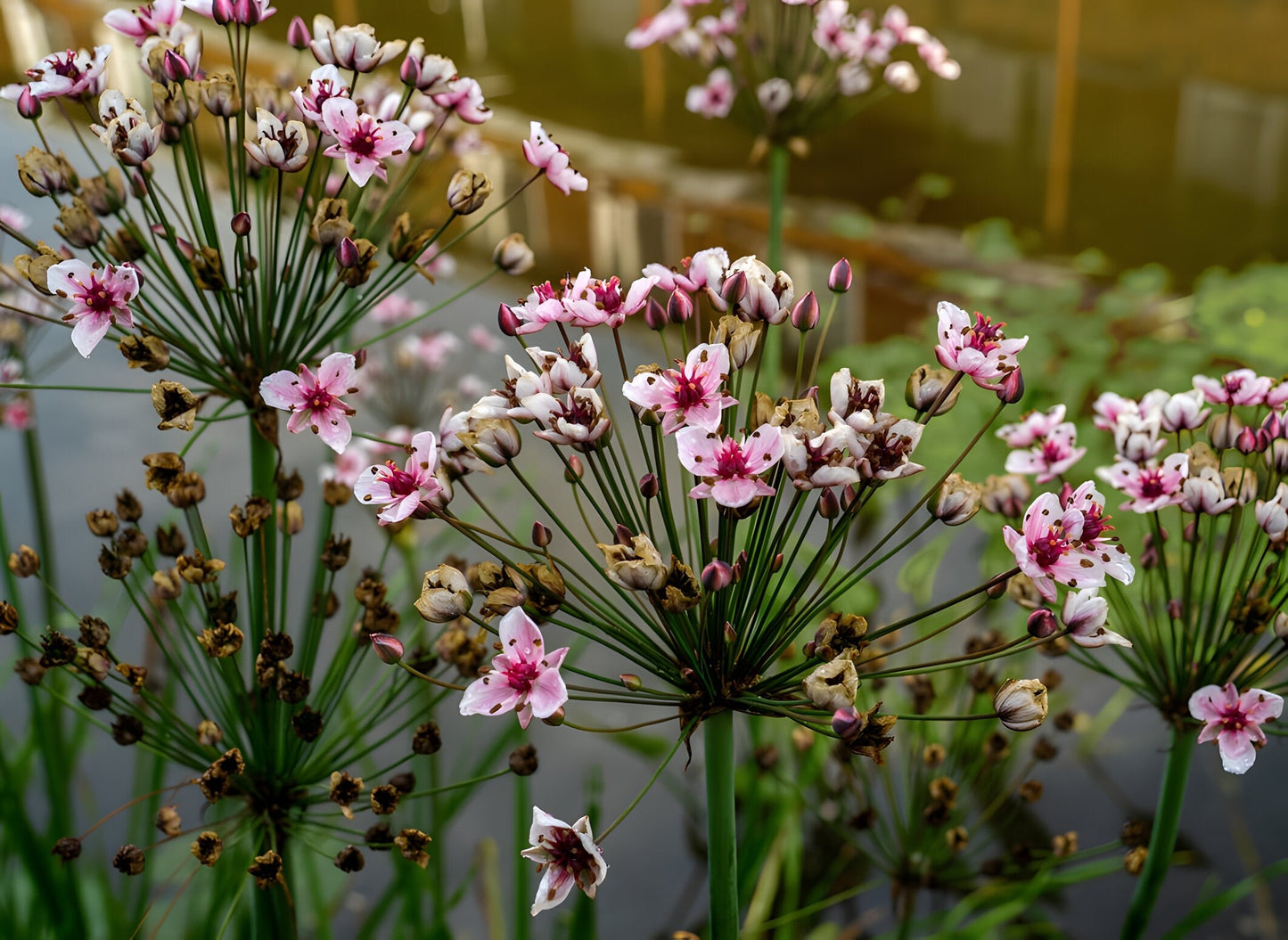
Butomus umbellatus, known as flowering rush, is a UK native marginal plant with narrow, grassy leaves that open bronze-purple and turn dark green. In summer, tall stems carry rounded heads of rose-pink flowers well above the leaves.
Flowering rush at a glance
| Botanical name | Butomus umbellatus |
|---|---|
| Common name | Flowering rush |
| Plant type | Rush-like perennial; dies back in winter |
| Height and spread | Leaves about 60 cm; flower stems about 1 m (RHS: up to 1.5 m). Spread up to 50 cm |
| Flowers | Rose-pink, in rounded heads, June to August |
| Position | Full sun |
| Soil | Fertile mud or shallow water |
| Pond depth | 5–25 cm of water over the crown |
| Hardiness | RHS H5 – hardy in a cold winter (-15 to -10°C) |
| Native to | UK and Ireland (native wild flower) |
Where to plant flowering rush
- Sunny pond shelves with 5–25 cm of water over the crown
- The margins of wildlife ponds, lakes and slow streams
- Formal ponds, where the upright leaves add height
Is flowering rush good for wildlife?
Yes. It is on the RHS Plants for Pollinators list and the flowers attract bees.
How to plant and care for it
Plant in an aquatic basket in spring or summer, in full sun. Cut back the old leaves in autumn. Watch for water lily aphid on the leaves in summer.
Is flowering rush invasive?
It is a UK native plant. It is invasive in North America, where it was introduced.
Which size should I buy?
Bare-root plants (7 cm, 9 cm, 1 litre and 3 litre) arrive without a pot or compost and are the most economical way to plant a group. Potted plants (9 cm, 1 litre and 3 litre) arrive growing in our peat-free compost and give a faster display. Packs of 3 cost less per plant. The 2x Pot & Compost option is two plants supplied with pots and compost.
Share