Glyceria maxima var. variegata - Variegated Reed Sweet-Grass, Pond Plant
Glyceria maxima var. variegata - Variegated Reed Sweet-Grass, Pond Plant
Couldn't load pickup availability
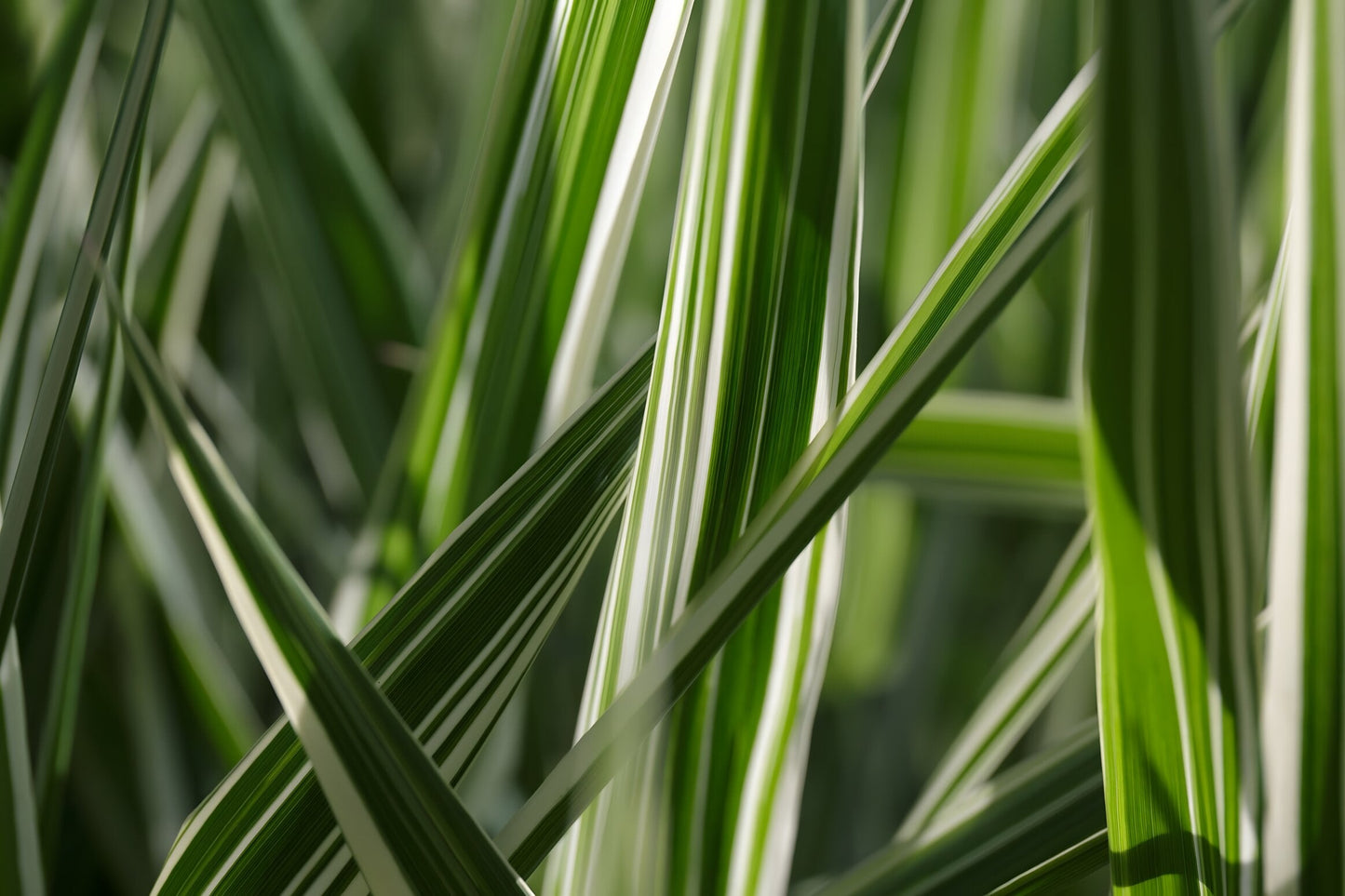
Glyceria maxima var. variegata (often sold as Glyceria maxima 'Variegata'), known as variegated reed sweet-grass, is a spreading grass with narrow leaves striped green and cream. The leaves are often pink-tinged in spring and at the base, and turn tan in autumn.
Variegated reed sweet-grass at a glance
| Botanical name | Glyceria maxima var. variegata (syn. G. maxima 'Variegata') |
|---|---|
| Common name | Variegated reed sweet-grass |
| Plant type | Spreading grass; dies back in winter |
| Height and spread | About 50 cm–1 m tall; spreads 1.5–2.5 m |
| Flowers | Purplish-green plumes in late summer (July and August) |
| Position | Full sun |
| Soil | Wet, poorly drained clay, loam or sand; any pH |
| Pond depth | 0–15 cm of water |
| Hardiness | RHS H6 – hardy in a very cold winter (-20 to -15°C) |
| Native to | Variegated garden form (RHS: not native) |
Does it spread?
Yes. It spreads by suckering roots, and the RHS says it can become a nuisance if not managed. The species is invasive in New Zealand, Australia and North America. In smaller ponds, grow it in a basket and divide it every few years.
Where to plant it
- Sunny pond margins with up to 15 cm of water
- Wet ground and bog gardens, in a basket
- Larger ponds where it has room
How to plant and care for it
Plant in full sun in wet soil or shallow water. The RHS describes it as generally free of pests and diseases.
Which size should I buy?
Bare-root plants (7 cm, 9 cm, 1 litre and 3 litre) arrive without a pot or compost and are the most economical way to plant a group. Potted plants (9 cm, 1 litre and 3 litre) arrive growing in our peat-free compost and give a faster display. Packs of 3 come in 7 cm, 9 cm, 1 litre and 3 litre bare-root sizes and cost less per plant. The 2x Pot & Compost option is two plants supplied with pots and compost.
Share