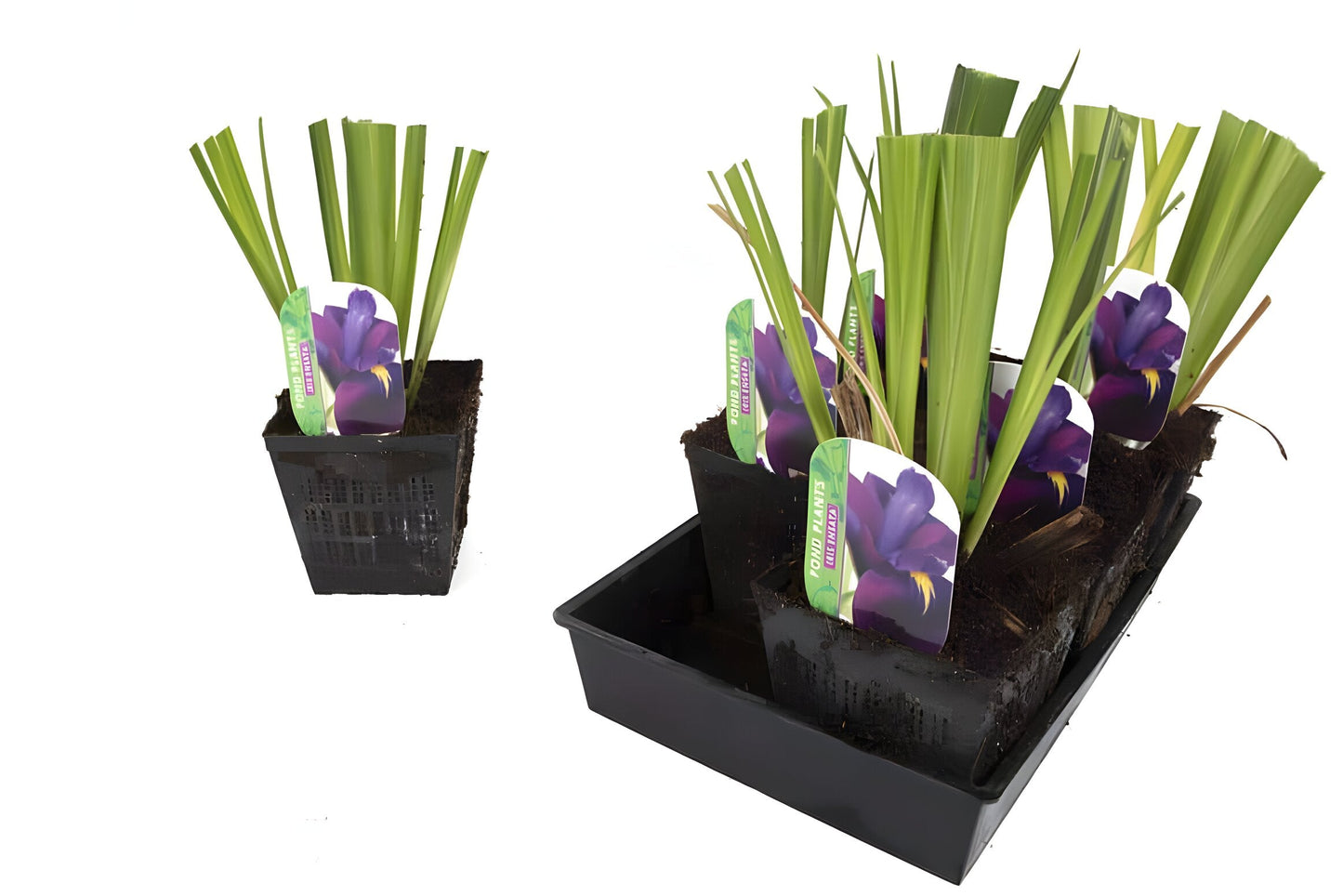
Iris ensata - Japanese Iris, Bog Plant
Iris ensata - Japanese Iris, Bog Plant
Couldn't load pickup availability
Iris ensata (also sold as Iris kaempferi), known as Japanese iris, forms dense clumps of sword-shaped leaves with a prominent midrib. In June and July it carries large, rich violet-purple flowers, 10–12 cm across, with a small white or yellow flash on the broad falls. It flowers later than Iris laevigata.
Japanese iris at a glance
| Botanical name | Iris ensata (syn. I. kaempferi) |
|---|---|
| Common name | Japanese iris, Japanese flag |
| Plant type | Clump-forming iris; dies back in winter |
| Height and spread | About 80 cm tall (up to 1 m), up to 50 cm wide |
| Flowers | Rich violet-purple, 10–12 cm across, with a white or yellow flash, June and July |
| Position | Full sun or part shade |
| Soil | Moist to wet, deep, humus-rich, acid soil; avoid lime |
| Pond depth | None in winter – bog garden or damp soil |
| Hardiness | RHS H6 – hardy in a very cold winter (-20 to -15°C) |
| Native to | East Asia (not UK native) |
Can Iris ensata grow in a pond?
Not all year. It likes plenty of water in summer, but its crowns rot in standing water over winter. Grow it in a bog garden or damp soil at the pond edge. If you stand pots in shallow water in summer, raise them so the crown is above the water from autumn to spring.
What soil does it need?
Moist, rich, acid soil. It does not like lime, so use ericaceous compost in pots if your soil is chalky or alkaline.
How to plant and care for it
Plant in spring or summer. Remove dying leaves in autumn. Watch for slugs, snails and thrips.
Is it poisonous?
Yes. Irises are harmful if eaten by people or pets, so wear gloves when handling it.
Which size should I buy?
Bare-root plants (7 cm, 9 cm, 1 litre and 3 litre) arrive without a pot or compost and are the most economical way to plant a group. Potted plants (9 cm, 1 litre and 3 litre) arrive growing in our peat-free compost and give a faster display. Packs of 3 come in 7 cm, 9 cm, 1 litre and 3 litre bare-root sizes and cost less per plant. The 2x Pot & Compost option is two plants supplied with pots and compost.
Share