Lysimachia nummularia - Creeping Jenny, Native Pond Marginal Plant
Lysimachia nummularia - Creeping Jenny, Native Pond Marginal Plant
Couldn't load pickup availability
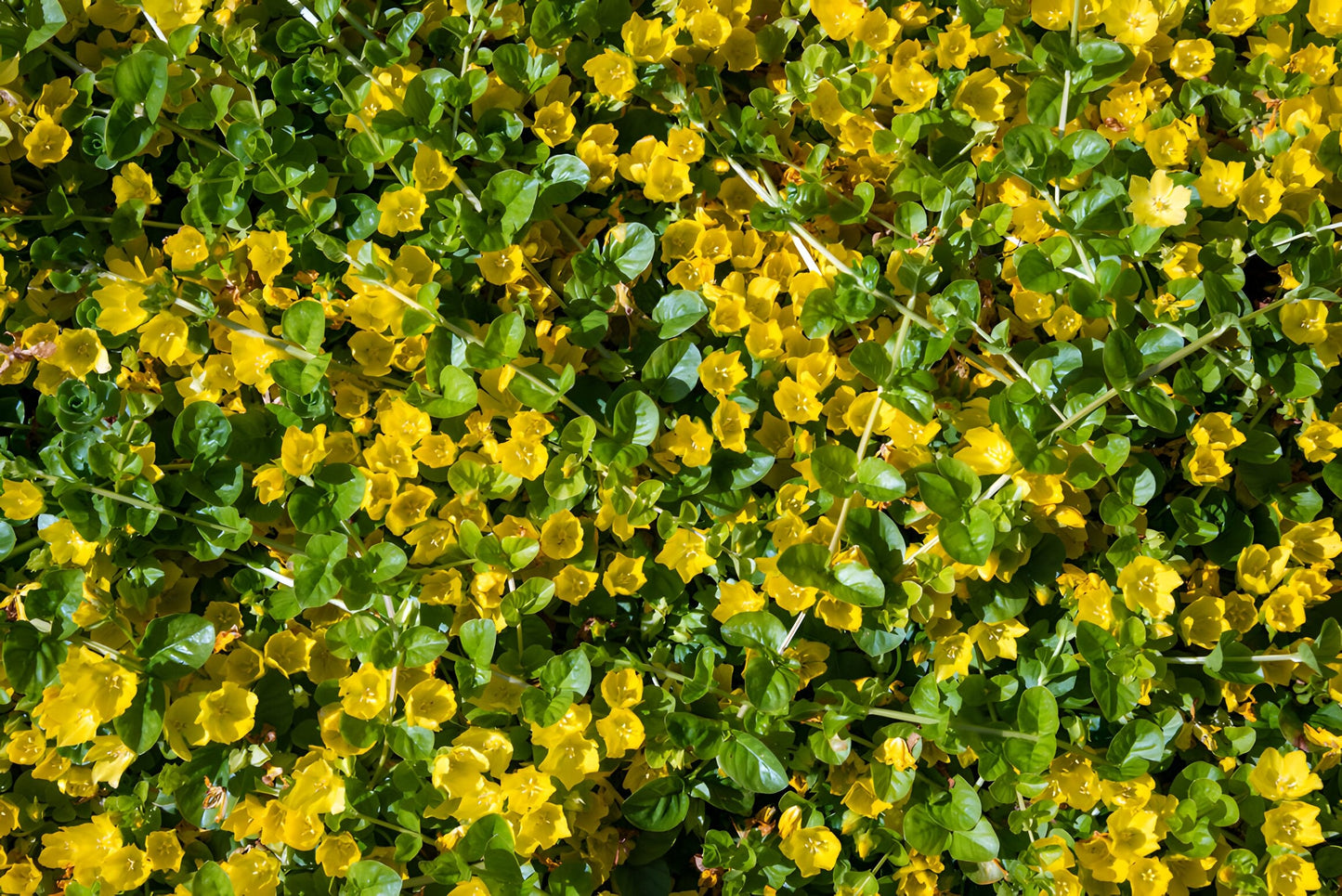
Lysimachia nummularia, known as creeping Jenny, is a low, carpeting UK native with trailing stems of round, coin-shaped leaves. From June to August it is dotted with yellow, cup-shaped flowers about 2 cm across.
Creeping Jenny at a glance
| Botanical name | Lysimachia nummularia |
|---|---|
| Common name | Creeping Jenny, moneywort |
| Plant type | Low, creeping perennial; mostly evergreen in mild winters |
| Height and spread | 5–10 cm tall, spreading to about 50 cm |
| Flowers | Yellow, cup-shaped, June to August |
| Position | Full sun or part shade |
| Soil | Moist or boggy soil, or shallow water |
| Pond depth | 0–15 cm of water |
| Hardiness | RHS H6 – hardy in a very cold winter (-20 to -15°C) |
| Native to | UK and Ireland (native wild flower) |
Where to plant creeping Jenny
- Trailing over pond edges to hide the liner
- Wet ground, bog gardens and damp borders
Does creeping Jenny spread?
Yes, quickly. The RHS notes it can become a nuisance if not managed. Trim it back regularly to keep it where you want it.
Is it good for wildlife?
The flowers are visited by bees, hoverflies and butterflies, and the trailing stems give small pond creatures shelter.
Is creeping Jenny poisonous?
The RHS Plants shop lists it as toxic if eaten and as a skin and eye irritant, so wear gloves when handling it.
Which size should I buy?
Bare-root plants (7 cm, 9 cm, 1 litre and 3 litre) arrive without a pot or compost and are the most economical way to plant a group. Potted plants (9 cm, 1 litre and 3 litre) arrive growing in our peat-free compost and give a faster display. Packs of 3 come in 7 cm, 9 cm, 1 litre and 3 litre bare-root sizes and cost less per plant. The 2x Pot & Compost option is two plants supplied with pots and compost.
Share