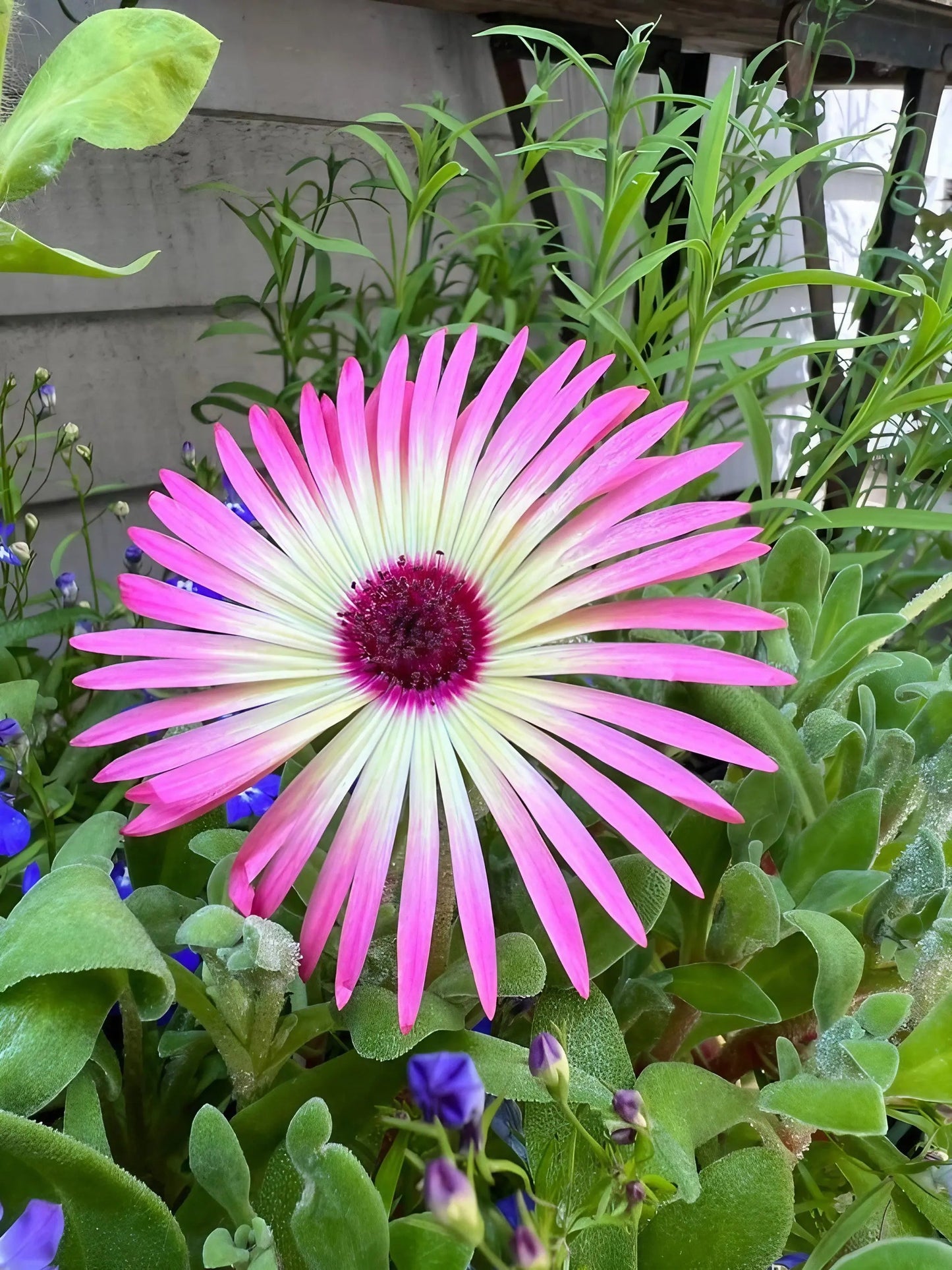
Mesembryanthemum Harlequin
Mesembryanthemum Harlequin
Couldn't load pickup availability
Dorotheanthus bellidiformis 'Harlequin' (also sold as Mesembryanthemum 'Harlequin') Livingstone Daisy / Ice Plant 'Harlequin'
Low ground-hugging carpets of fleshy crystalline succulent foliage that literally sparkles in bright sunlight, exploding into dazzling neon-coloured daisy flowers in shocking pink, electric orange, peachy apricot, sunny yellow, magenta and creamy white — Mesembryanthemum 'Harlequin' is the heat-loving succulent annual that thrives where almost nothing else survives.
If you have a hot dry spot where absolutely nothing else will grow — that baking gravel driveway edge, the sizzling top of a stone wall, the neglected hanging basket position — 'Harlequin' is your salvation. This spectacular South African succulent (commonly called Livingstone Daisy or Ice Plant) produces a low ground-hugging carpet of fleshy crystalline leaves that literally sparkle and glisten in bright sunlight like scattered jewels — the leaves are covered in tiny transparent "water vesicles" that catch the light. But the real magic happens when the sun comes out: the daisy-like flowers burst open in an absolutely dazzling neon explosion of colour, vibrant shocking pinks, electric oranges, peachy apricots and sunny yellows, many with dramatic contrasting concentric rings. The flowers are heliotropic — they track the sun across the sky throughout the day, opening at sunrise and closing in evening or on cloudy days. Half-hardy annual (H2), originating from coastal deserts of South Africa. Height 10–15cm; spread 20–30cm.
A note on growing
Sow indoors February–April at 18–22°C. Surface-sow as Mesembryanthemum seeds need light to germinate. Germination 7–14 days. Pot on once seedlings are large enough to handle. Plant out only after all risk of frost has passed (late May or June). Mesembryanthemum is genuinely frost-tender and absolutely needs a warm, sunny, sheltered position.
⚠️ Do NOT overwater: Mesembryanthemum is a true desert succulent. Water sparingly when first planting out, then almost never. Soggy roots are the biggest threat to the variety — it is a genuine "thrive on neglect" plant. The water-storing vesicles in the leaves provide the plant's own water reserves; supplementary watering causes rot.
Plant in full sun in poor, dry, well-drained soil. Sandy or gravelly soils are ideal. The plant thrives in conditions that defeat most ornamentals: sun-baked positions, thin poor soil, gravel beds, hanging baskets in full sun.
Where it shines
In the hottest driest positions any garden offers — gravel beds, sun-baked driveways, stone walls, dry banks, hanging baskets in full sun. In Mediterranean-style gardens and gravel plantings. As an "impossible position" plant — Mesembryanthemum survives where almost nothing else can. As a vital nectar source during UK heatwaves when many traditional cottage plants wilt and stop flowering — the heat-tolerance makes it a genuine resilient pollinator support plant in changing UK climate conditions. In containers where the trailing sparkling foliage cascades over edges.
Plant alongside
The ultimate heatwave duo: pair 'Harlequin' with Californian Poppy 'Golden West' (if stocked) — both love lean dry soil and thrive on neglect, and the silky orange Poppy cups rising above the neon mat of Livingstone Daisies create a stunning vibrant display for any hot bank or gravel area. For a scented contrast frame, combine with Alyssum 'Royal Carpet' — the honey-scented violet-purple Alyssum mounds make the neon pinks and oranges of 'Harlequin' truly pop with intensity. For tonal hot-cottage colour, pair with Gomphrena 'Strawberry Fields'.
Share