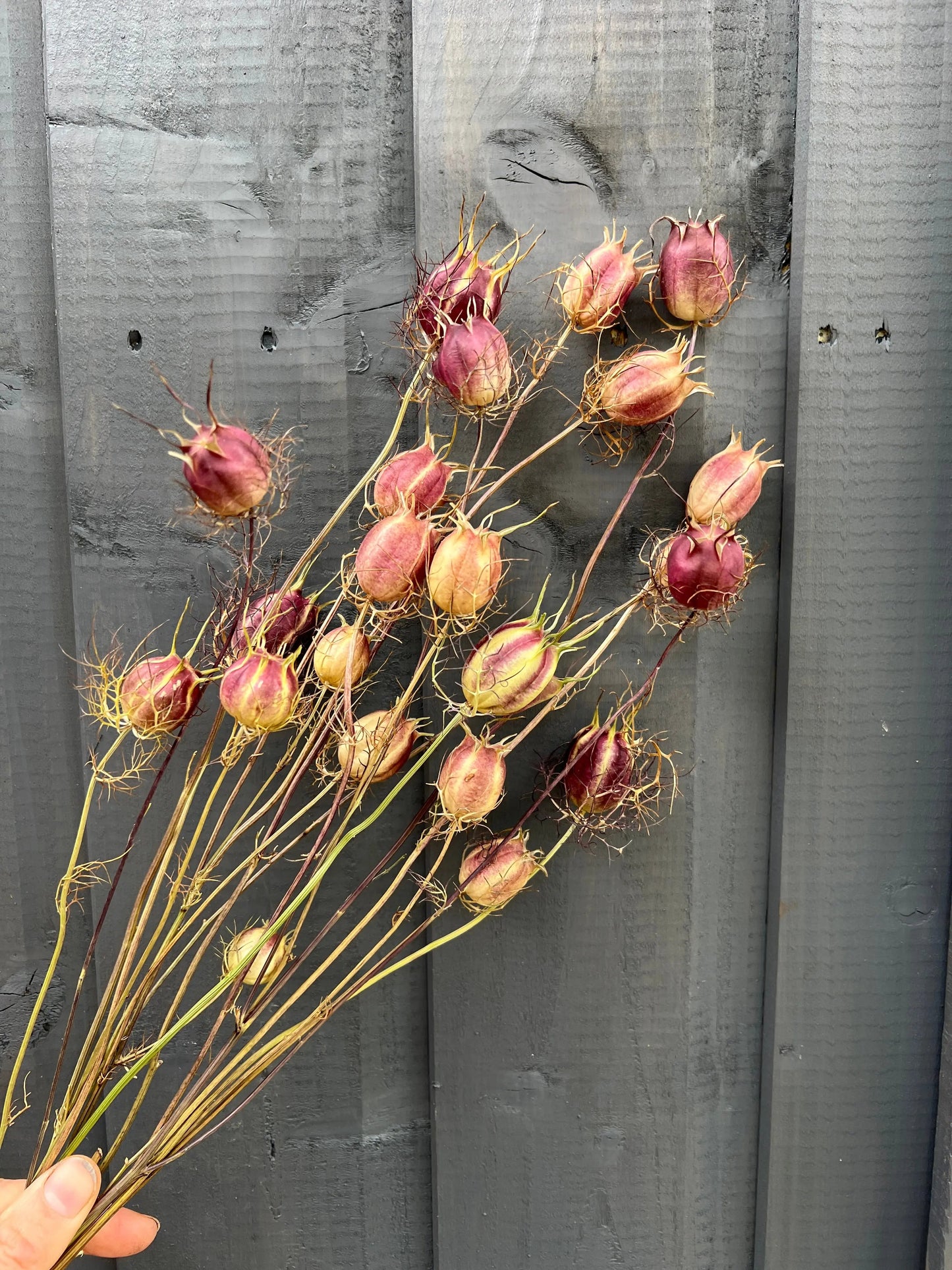
Nigella Seed Heads Dried | Love-in-a-Mist Norfolk Pods
Nigella Seed Heads Dried | Love-in-a-Mist Norfolk Pods
Couldn't load pickup availability
Nigella (Love-in-a-mist) is famous for its blue summer flowers — but for many gardeners, the real prize comes afterwards. As the delicate petals fall, the centre of each flower swells into a magnificent inflated seed pod that looks like a miniature hot air balloon or a paper lantern, wrapped in a spidery halo of the dried "mist" foliage that gives the plant its name. Rattle a stem gently and you'll hear the sound of the tiny black seeds still inside the papery capsule — one of the quietest, most satisfying botanical sounds in a dried arrangement. Structural, decorative, and quietly extraordinary.
Barn-dried at Salle Moor Hall, Norfolk. Bunches of approximately 15 stems, each 40-60cm long, with the seed pods 2-3cm in diameter and coloured in a natural mix of pale green, straw-gold, and deep burgundy stripes. Grown chemical-free on our own cutting field. Hand-harvested in late summer when the pods are fully swollen and the stripes have developed their rich colour, then air-dried in the barn to preserve their inflated shape. No air miles, no imported stems, no dyes or preservatives. Seasonal, available while our late-summer stock lasts.
What makes them extraordinary
Nigella damascena is a member of the Ranunculaceae family (buttercup relatives) — a family known for structural botany rather than showy colour. The seed pod is an evolutionary marvel: multiple carpels fused into a single inflated capsule with prominent purple-brown stripes, topped by long narrow horn-like styles that give each pod its distinctive silhouette. As the pod dries, the walls tighten but retain their inflated form, creating a lightweight but rigid structure that holds its character indefinitely. The spidery "mist" foliage — feathery bracts that originally surrounded the flower — dries alongside the pods, adding movement and texture around each stem.
The rattle
Like poppy heads, Nigella pods are full of tiny black seeds. When you handle the bunch, you'll hear the gentle rattle of seeds moving inside the papery capsule — a small sensory pleasure that's part of the product's character. Vigorous shaking or tipping upside down might release a few seeds through natural gaps in the pod. We recommend giving new bunches a gentle shake outdoors before bringing them inside for arrangements. Once they've settled, the pods sit quietly in place. The released seeds are viable, incidentally — if you want to grow your own Love-in-a-mist, save them for spring sowing.
Styling ideas
- Volume builder in dried bouquets — the round pod shape bulks out arrangements without adding visual weight. Excellent for filling gaps between big-headed flowers (helichrysum, achillea, hydrangea) and delicate elements (grasses, cornflower stems)
- Autumn wreaths — the pods wire easily onto wreath rings, and the mix of green, straw and burgundy suits October and November wreath-making beautifully. Particularly good with dried grasses, seed heads, and warm-toned dried flowers
- Christmas baubles on a stick — the smooth papery surface takes spray paint remarkably well. Metallic silver or gold gives you instant Christmas decoration ideas for tabletop displays, mantelpiece garlands, or gift toppers. Copper spray gives a warmer autumnal alternative
- The seed head trio — combine with our dried Hesperis Sweet Rocket (long thin siliques) and dried Cornflower seed heads (small papery star-shapes) for a themed seed-head arrangement that captures the full character of a late-summer meadow gone to seed
- Modern minimalist single-stem — three or five stems in a plain bud vase reads as considered sculpture. The pods are architectural enough to hold their own without accompanying flowers
- Cottagecore styling — the natural stripe colouration suits farmhouse kitchens, rustic mantelpieces, and English country interior styling particularly well. Works alongside dried lavender, wheat, and old-fashioned cottage garden dried varieties
- Craft supplies — individual pods snip cleanly from stems for craft work, resin art, or dried flower jewellery
Perfect dried companions
- Dried Wheat — the golden glow. Warm yellow straw tones contrast beautifully with the cool greenish-purple stripes of the Nigella pods. The classic country combination
- Dried Statice — the colour pop. Purple or blue Statice picks up the burgundy stripes on the Nigella pods, creating a cohesive designed look
- Dried Hesperis Sweet Rocket — the seed head partner. Both share the "gone to seed" architectural character, and Hesperis's long thin siliques contrast beautifully with Nigella's round inflated pods
- Dried Cornflower Seed Heads — the third seed head. Small papery cream heads scattered through the taller structural Nigella pods reads as an English hedgerow gone to seed
- Dried grasses — Bunny Tails, reed, or wheat provide the soft counterpoint to Nigella's architectural roundness
- Dried Feverfew or Ballerina — the soft cream-white daisies read fresh against the deeper Nigella stripes
Care note. Nigella pods are among the more durable dried elements — the inflated structure resists compression and the papery walls hold their shape for years indoors. Keep out of direct sunlight to preserve the burgundy stripes (which are the most UV-sensitive part of the pod). Handle from the base of the bunch. If pods get compressed during transit or storage, the inflated shape often re-expands slightly given a few days at rest. If seeds start to rattle out through natural gaps, this is normal and cosmetically insignificant. Store dry.
Growing your own. Nigella damascena is one of the easiest and most rewarding hardy annuals from seed — direct-sown in autumn (for large early-summer plants) or April (for later-summer flowering), it germinates readily and self-seeds prolifically once established. If you leave a few flowers on the plants at the end of the flowering season, they'll dry naturally to exactly the character in this bunch, and produce plenty of seed for next year's sowing. Bishy Barnabee's sell Nigella seeds in the annual flower seed range — growing your own gives you the summer garden colour and the autumn drying harvest, plus the small sensory pleasure of rattling your own homegrown pods to check they've dried properly.
Share