Pumpkin Queensland Blue
Couldn't load pickup availability
Pumpkin 'Queensland Blue' Seeds
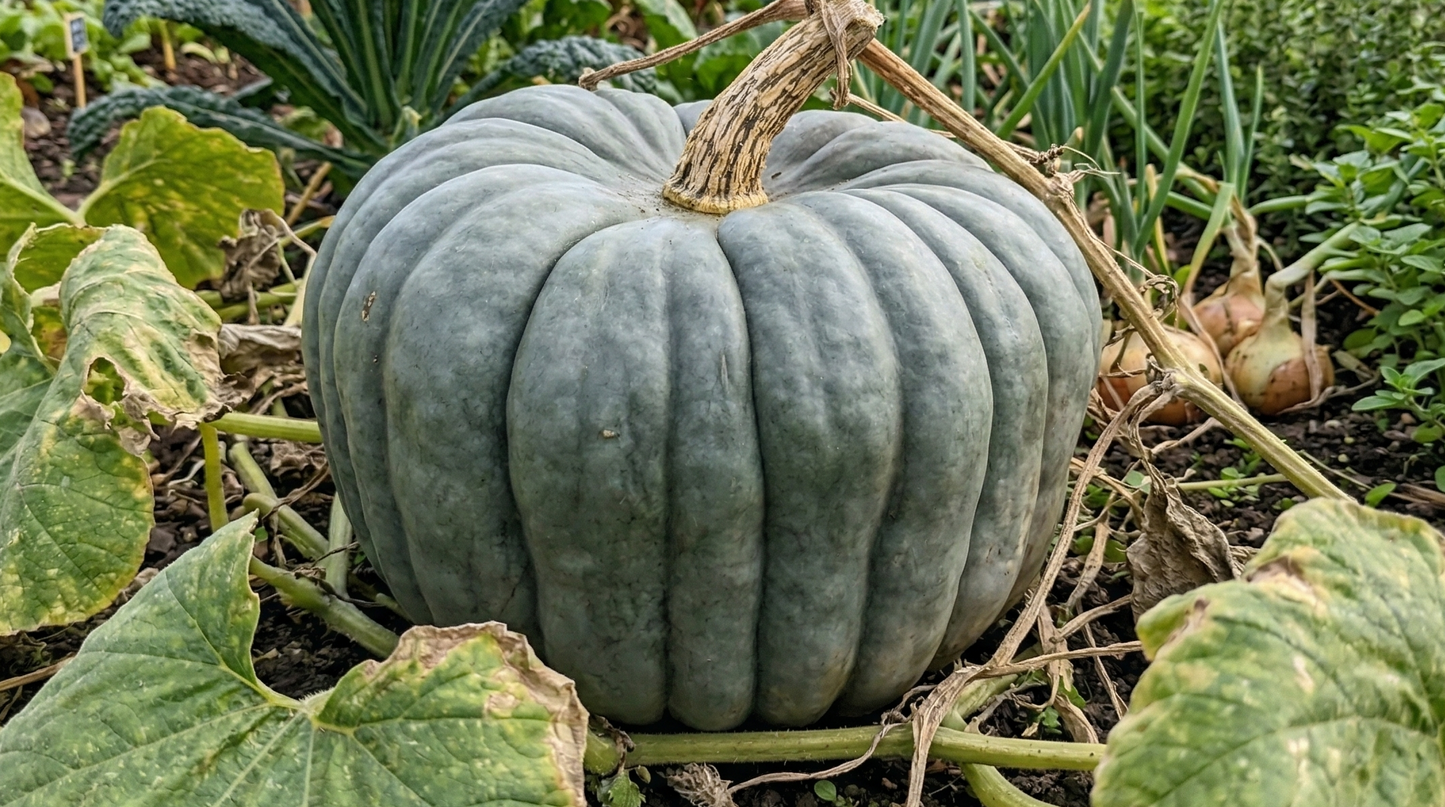
A large, deeply ribbed, slate-blue to grey-green drum of extraordinary visual character and outstanding culinary quality, storing effortlessly through winter and improving in flavour and sweetness for months after harvest.
Queensland Blue is an Australian heirloom variety of considerable age and considerable reputation — a large, drum-shaped pumpkin with deep, pronounced ribs and a distinctive slate-blue to grey-green skin that is entirely unlike the familiar orange halloween pumpkin and considerably more interesting in almost every respect. The skin colour is the first thing that arrests attention, but the culinary qualities are what make experienced growers return to it year after year: dense, deep orange, dry-textured flesh of exceptional sweetness and flavour that intensifies further in storage, a thick skin that cures hard and keeps the flesh in outstanding condition for four to six months after harvest without refrigeration, and a versatility in the kitchen that takes it from soup to roasting tray to pie filling with equal distinction.
It is also a genuinely substantial vegetable — mature fruits typically weigh between 4 and 8kg, occasionally more, and a single well-grown plant will produce two or three fruits of this size. Planted in a prepared, compost-rich position in late May or early June, with the generous space its trailing vines require, Queensland Blue will spend the summer building those great ribbed drums quietly and without drama, and by September or October present the kitchen garden with what amounts to a winter larder's worth of outstanding vegetable in a single harvest. It is not a pumpkin for the impatient or the space-constrained, but for those who can give it what it needs it is one of the most rewarding and most beautiful vegetables the kitchen garden can produce.
🌿 Understanding the Plant
Cucurbita maxima 'Queensland Blue' is a Half-Hardy Annual — a large-fruited, trailing heirloom pumpkin variety originating from Australia, where it has been grown commercially and domestically since at least the early twentieth century. It belongs to the Cucurbita maxima species — the same species as butternut squash and Crown Prince — which typically produces larger, sweeter, better-storing fruits than the Cucurbita pepo species that includes most Halloween pumpkins.
The Colour — Why It's Blue: The grey-blue to slate-green skin colour of Queensland Blue comes from a waxy bloom covering the outer surface of the fruit — the same type of bloom found on some plums and grapes — rather than a pigment difference. As the fruit matures and the skin cures after harvest, this bloom intensifies and deepens, and the colour shifts slightly depending on growing conditions and maturity. Fruits harvested and stored in a warm, dry place will develop the deepest, most saturated grey-blue colour over the first few weeks of curing.
Why maxima Stores Better: The thick, hard-curing skin of Cucurbita maxima varieties like Queensland Blue creates a much more effective moisture barrier than the thinner skins of pepo types, significantly slowing moisture loss and preventing the flesh from deteriorating. A Queensland Blue harvested in October and stored in a cool, frost-free room will still be in perfect condition — often sweeter and better flavoured than at harvest — in February or March. This storage quality transforms a single autumn harvest into a winter-long ingredient of consistent quality.
The Dry Flesh Advantage: Queensland Blue's flesh is notably drier in texture than many other pumpkins — it contains less water per unit weight, which means it roasts to a more concentrated, sweeter, less watery result and produces soups and purees with better body without needing reduction. This dry-flesh quality is one of the characteristics most valued by cooks and is a direct result of the variety's breeding for culinary performance rather than visual impact.
🌱 Growing Guide
Queensland Blue is grown in the same way as other large pumpkins — it needs warmth, rich soil, generous space, and consistent moisture — but its larger ultimate size means it benefits from more generous preparation and wider spacing than smaller varieties.
How to Sow:
Sow indoors from late April to May in individual 7–9cm pots, one seed per pot on its side approximately 2cm deep. Maintain a temperature of 18–22°C. Germination is rapid, typically within 5–7 days. Grow on in a warm, bright position — pumpkin seedlings grow quickly and need good light to prevent leggy, drawn growth. Do not sow too early — large pumpkin plants become ungainly before they can go outside, and plants sown in late April and planted out in late May often catch up and overtake plants sown weeks earlier.
Soil Preparation:
Queensland Blue is a hungry, vigorous plant that responds dramatically to soil enrichment. Dig a planting hole approximately 30–40cm deep and wide, fill with well-rotted compost or manure mixed with the excavated soil, and plant the seedling into this enriched mound. The traditional method of growing pumpkins on a compost heap is entirely appropriate — the warmth and fertility of a well-made heap produces exceptional results. Prepare the site two to three weeks before planting to allow the soil to settle.
Planting Out:
Plant out from late May to early June after thorough hardening off, once all risk of frost has completely passed. Space plants at least 150–180cm apart — Queensland Blue produces long, vigorous trailing vines that can extend 2–3 metres in a good season and need the space to spread without competing with neighbouring plants. In a small garden, train the vines in a specific direction along a fence or border edge to manage them more precisely.
Pollination:
Like courgettes, pumpkins produce separate male and female flowers. Male flowers appear first; female flowers follow with a small immature fruit at the base. Both must be open simultaneously for bees to transfer pollen and set fruit. In poor weather or low bee activity, hand-pollinate by transferring pollen from a male flower to a female flower using a small brush or by removing the male flower and touching the centres together directly.
Curing and Storing:
Harvest fruits in September or October when the skin has hardened fully and the stem has begun to dry and cork. Leave 5–10cm of stem attached — this acts as a natural seal and prevents rot entering through the stem end. Cure the harvested fruits in a warm, dry place (ideally 25–30°C) for two to three weeks before moving to cool, frost-free storage. Properly cured Queensland Blue stores for four to six months in excellent condition.
📋 Plant Specifications
| Botanical Name | Cucurbita maxima 'Queensland Blue' |
| Common Name | Queensland Blue Pumpkin |
| Plant Type | Half-Hardy Annual |
| Hardiness | H2 — tender; plant out only after last frost |
| Growth Habit | Trailing vine — 2–3m spread; needs generous space |
| Light Requirements | Full Sun ☀️ |
| Plant Spacing | 150–180cm apart minimum |
| Fruit Skin Colour | Slate-blue to grey-green — deeply ribbed, distinctive waxy bloom |
| Fruit Flesh | Deep orange, dense, dry-textured — exceptionally sweet |
| Fruit Weight | Typically 4–8kg at maturity |
| Fruits per Plant | 2–3 fruits per well-grown plant |
| Harvest Period | September to October |
| Storage | 4–6 months in cool, frost-free conditions after curing |
| Best Uses | Roasting, soups, purees, pies, risotto, storing through winter |
| Seeds per Packet | 10 seeds |
| Perfect For |
🎃Dramatic Ornamental Kitchen Garden Display
🫙Long-Term Winter Storage
🍲Exceptional Roasting & Soup Quality
🏺Heirloom & Heritage Vegetable Growing
🌿Large Kitchen Garden Statement Crop
|
🤝 Companion Planting
Queensland Blue is grown in the same way as other large cucurbits, and the companions that work best are those that attract the pollinators essential for fruit set and deter the pest insects that can damage the soft young foliage and fruit:
- 🌼 Calendula 'Art Shades Mixed': The Pest Deterrent. Calendula is the most broadly useful companion for all cucurbits — its sticky stems trap aphids and whitefly before they establish on the pumpkin's soft young foliage, its scent disrupts the host-finding behaviour of pest insects, and its open flowers attract hoverflies and parasitic wasps whose larvae and adults consume aphid colonies throughout the season. Planted at the edge of the pumpkin's growing area or around the perimeter of its spreading vines, it provides a living perimeter of pest deterrence that is as visually attractive as it is functionally effective. The warm amber and apricot tones of Art Shades Mixed alongside the dramatic grey-blue drums of Queensland Blue on the ground in autumn creates one of the most visually striking harvest scenes in the kitchen garden.
- 🌟 Borage: The Pollination Partner. Pumpkin fruit set depends entirely on bees visiting both male and female flowers in the same morning, and Borage is the most effective plant in the range for drawing bees into the immediate vicinity and keeping them there. As one of the highest nectar producers in the garden, Borage sustains bumblebees and solitary bees in dense numbers throughout summer — bees visiting Borage plants growing alongside the pumpkin will naturally visit the large, open pumpkin flowers at the same time, dramatically improving pollination rates and the number of fruits that set. In a cool or dull summer when bee activity is reduced, the presence of Borage alongside the pumpkin can be the difference between two or three large fruits and none at all.
- 🌿 Basil Classic Italian: The Aromatic Companion. Basil is a traditional companion for all cucurbits, its volatile aromatic oils deterring the aphids and whitefly that target the young, soft growth of pumpkin plants in early summer. It also fills the bare ground around the pumpkin's base in June and July before the vines spread to cover it, suppressing weeds and retaining soil moisture. Planted alongside or between the pumpkin vines, it provides a functional, fragrant, and edible ground cover through the most critical early weeks of the pumpkin's growing season.
- 👑 Crown Prince F1 Squash: The Complete Winter Squash Pairing. Growing Queensland Blue alongside Crown Prince F1 completes the most spectacular and most practically productive winter squash harvest the kitchen garden can provide — the deep slate-blue ribbed drums of Queensland Blue alongside the steel-blue smooth globes of Crown Prince F1, both harvesting in September and October and both storing through winter in outstanding condition. The two varieties have different flesh textures and slightly different flavour profiles, providing variety and complementarity in the kitchen across the winter months. Together from a shared growing area, with shared companions and identical growing requirements, they represent the finest pairing in the winter squash range.
📅 Sowing & Harvest Calendar
Sow indoors in late April or May and plant out after the last frost — Queensland Blue spends the summer quietly building its great ribbed drums underground, presenting them for harvest in September and October when the skins have hardened to their characteristic slate-blue and the stems have begun to cork and dry.
| Jan | Feb | Mar | Apr | May | Jun | Jul | Aug | Sep | Oct | Nov | Dec | |
|---|---|---|---|---|---|---|---|---|---|---|---|---|
| 🌱 Sow Indoors | ||||||||||||
| 🪴 Plant Out | ||||||||||||
| 🎃 Harvest |
Three things make the most of Queensland Blue. First, always harvest with at least 5–10cm of stem attached and never remove or damage the stem after harvest — the stem is the natural seal that prevents rot entering the fruit, and a Queensland Blue with its stem pulled off will deteriorate within weeks regardless of how well everything else was done. Cut the stem cleanly with a sharp knife or secateurs. Second, cure before storing — place harvested fruits in a warm (25–30°C), dry, well-ventilated space for two to three weeks before moving to cool storage. Curing hardens the skin fully, heals any minor surface abrasions, and begins the conversion of starches to sugars that is the foundation of the variety's exceptional flavour in storage. A Queensland Blue put straight into a cool store without curing will not keep as long or taste as good as a properly cured one. Third, be patient — Queensland Blue is at its culinary finest not in October when it is first harvested but in December, January, and February when the sugars have fully developed and the flesh has reached its richest, sweetest, most deeply flavoured state. This is the winter kitchen garden's great reward: a vegetable that gets better the longer you wait.
🎃 The Heirloom Pumpkin That Earns Its Space
Cucurbita maxima 'Queensland Blue' is the pumpkin for the gardener who wants something genuinely extraordinary — visually striking in the garden, exceptional in the kitchen, outstanding in storage, and improving in flavour through every month of winter until it is finally used. Give it rich soil, generous space, and a Borage plant nearby for the bees; harvest in October with the stem intact; cure for two weeks; and then let it sit in a cool corner of the kitchen until December or January when it will be at its absolute finest — dense, sweet, deeply orange-fleshed, and entirely worth the summer's growing space it occupied.
📖 Want more detailed growing advice?
View our Complete Growing Guide →
Share