Squash Crown Prince F1
Squash Crown Prince F1
Couldn't load pickup availability
Cucurbita maxima 'Crown Prince' F1 Australian-bred blue-grey winter squash, RHS AGM
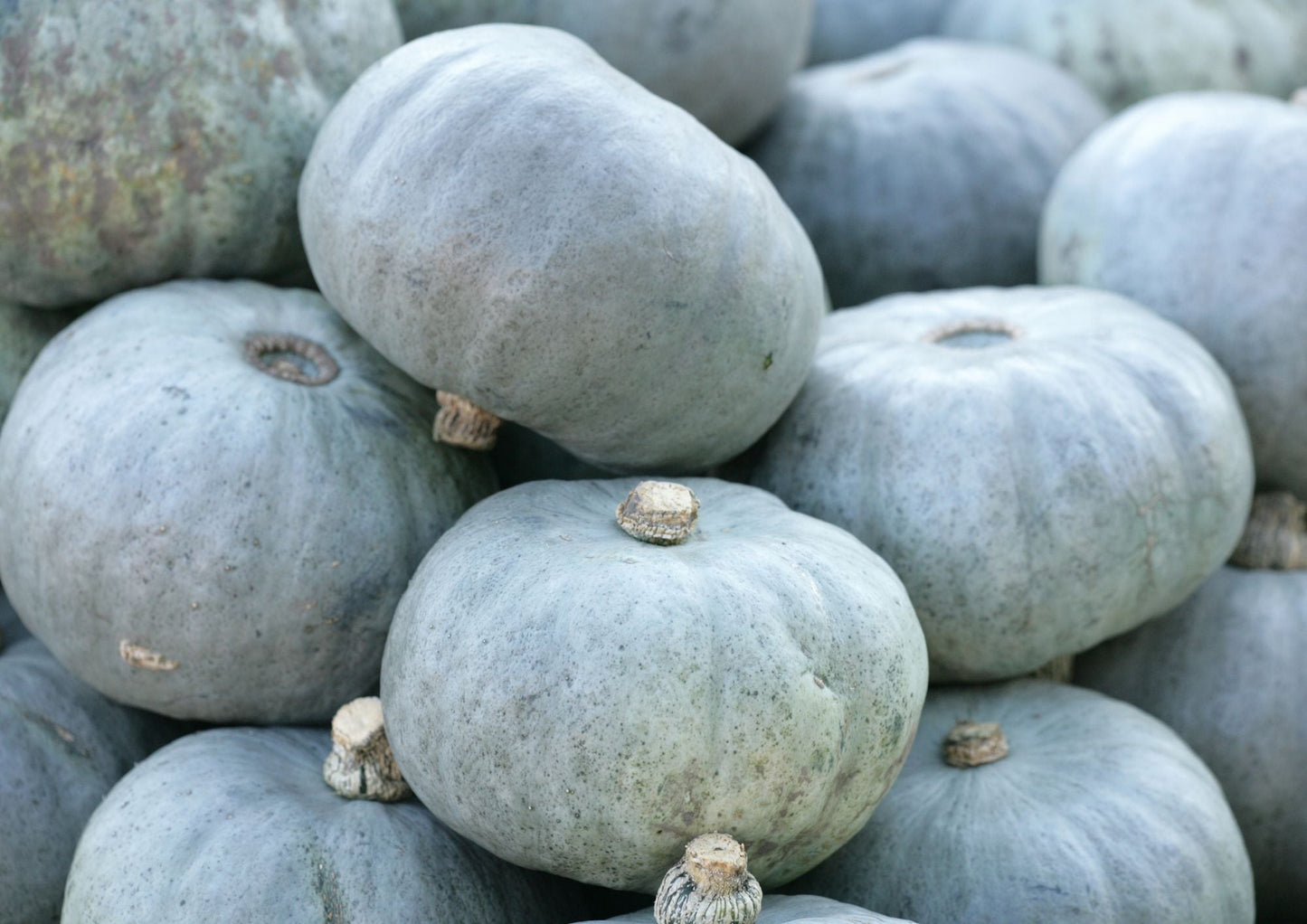
The reference winter squash against which all others are measured. Crown Prince F1 produces large, flat-globe-shaped fruits with a distinctive silvery blue-grey skin and dense, deeply-orange flesh inside, weighing 3–4kg at maturity. RHS Award of Garden Merit. The combination of architectural beauty, exceptional flavour, and outstanding storage life makes Crown Prince genuinely the pinnacle of the winter squash season — grow it once and it tends to become a permanent fixture in the kitchen-garden calendar.
The flavour is what justifies the long growing season. The orange flesh is dense, dry, sweet, and notably nutty — significantly more complex than the more commonly-available butternut squash, with the kind of caramelising character that turns oven-roasted wedges into something memorable. The flavour also deepens further in storage: fruits eaten in December or January often taste better than those eaten in September, as the starches gradually convert to sugars through curing.
The blue-grey skin is one of Crown Prince's most distinctive features — the colour comes from a natural waxy bloom (epicuticular wax) deposited on the surface as the fruit matures. This wax isn't merely decorative: it acts as a natural moisture barrier that slows water loss and dramatically extends storage life. The skin hardens to an almost impenetrable shell at full maturity, which is why Crown Prince stores so remarkably well — well-cured fruits keep their quality from autumn harvest through to the following spring, and occasionally well into summer.
The F1 hybrid breeding behind Crown Prince delivers practical advantages: enhanced plant vigour, more uniform fruit development, more reliable germination, and earlier maturity than open-pollinated alternatives — all genuinely valuable in the unpredictable UK growing season where the timing of frosts and the depth of summer warmth can vary considerably year to year. Note: as an F1 hybrid, seed saved from your fruits will not grow true; fresh seed each year is needed.
A note on growing
For full details, see our complete growing guide: How to Grow Squash Crown Prince F1 from Seed.
Sow indoors from mid-April to mid-May in 9cm pots of seed compost, planting seeds on their edge (vertical, narrowest profile down) at 2cm depth. This orientation prevents the seed sitting in water at its wider base and substantially reduces rotting losses. Germination takes 5–10 days at 18–21°C. Pot on to 12cm pots as seedlings establish, growing on at 15°C minimum.
Plant out from early June onwards, once all frost risk has passed and soil has warmed to at least 15°C. Crown Prince is completely frost-tender — even a light frost kills young transplants. Harden off over 7–10 days before planting out. Choose a sunny, sheltered position in soil enriched with substantial well-rotted manure or compost. Allow 1.5–2m between plants for trailing growth.
Water consistently and generously through summer. Feed weekly with high-potash tomato food from flowering onwards. Mulch around the base to retain moisture and keep developing fruits clean (rotting from soil contact is a real risk for ripening squashes — many growers place each developing fruit on a tile or piece of wood). Pinch out vine tips when 2–4 fruits have set per plant to direct energy into fruit development.
Harvest in October before the first hard frost. The skin should be hard enough that you cannot easily mark it with a fingernail. Cut each fruit with 5–10cm of stem still attached — the stem is essential for storage. Cure for 10–14 days in a warm room (25–30°C — a conservatory, heated greenhouse, or warm spare room) before final storage. This curing step is what most home growers skip, and is the difference between fruits that store for 3 months and fruits that store for 6–8 months. After curing, store in a cool (10–15°C), dry, well-ventilated place.
Where it shines
In the kitchen, Crown Prince is exceptional in any preparation that benefits from dense, sweet, dry squash flesh. Roast in wedges at 200°C with olive oil and herbs for 35–40 minutes — the flesh caramelises rather than steaming. Make squash soup: the dry flesh produces a naturally thick, luxuriously-textured soup without flour, cream, or excessive reduction. Make squash gnocchi, squash ravioli, or squash risotto. Slice thin and bake into "squash chips". Roast whole half-fruits stuffed with herbed rice, sausagemeat, or quinoa. The flavour pairs beautifully with sage, brown butter, parmesan, blue cheese, walnuts, smoked bacon, and warming spices.
In the garden, a single Crown Prince plant produces 2–4 substantial fruits — enough for a family's winter cooking with some left to give away. The plants are vigorous and rambling; either allow significant space for trailing or train vertically on robust supports (with sling supports for the heavy developing fruits). Pair with Pumpkin Queensland Blue for two distinctive blue-grey storage squashes from the same bed — both with outstanding keeping qualities and slightly different flavour profiles.
Plant alongside
Squashes benefit from companion planting that attracts pollinators and deters pests. Plant alongside French Marigold 'Spanish Brocade' to deter aphids and squash bugs. Calendula 'Neon' attracts beneficial predators. Nasturtiums act as decoy crops. The traditional "Three Sisters" planting of squash with sweetcorn and climbing beans works particularly well. Avoid planting near potatoes.
Share